
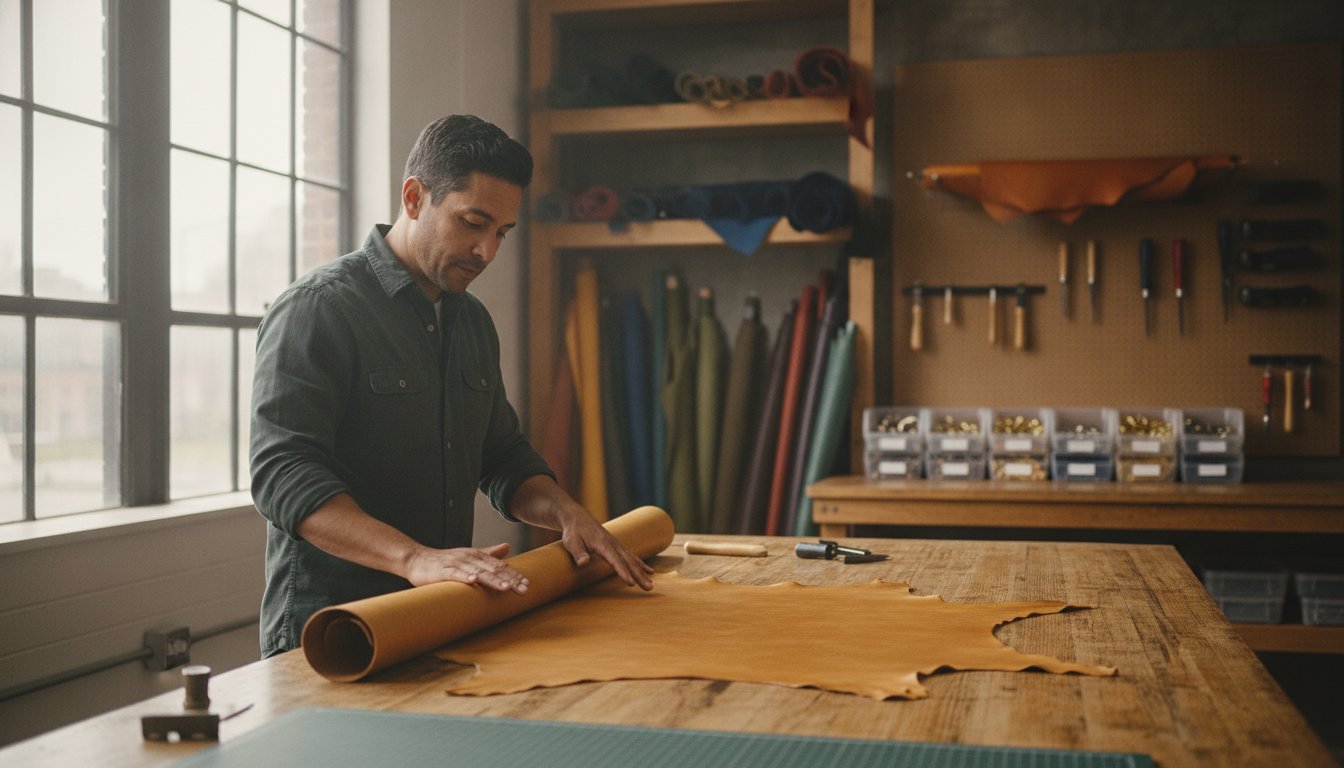
You don’t need a massive commercial contract or a secret industry handshake to access professional-grade materials at wholesale prices. Many artisans struggle with inconsistent leather weights or feel forced to pay retail prices for the tools and hardware that define their craft. It’s frustrating to find a perfect hide only to realize the supplier doesn’t carry the specific C.S. Osborne tools or Fiebing’s dyes you need to finish the job. We understand that the search for reliable leather craft supplies suppliers can feel like a series of compromises between quality and cost.
We’re going to debunk the most persistent myths surrounding the industry in 2026. You’ll learn how to identify partners who offer true value and professional standards without the industrial bureaucracy. This guide explores the reality of wholesale sourcing, the importance of material heritage, and how to find a single source for everything from premium veg-tanned hides to specialty hardware. It’s time to move past the “wholesale gatekeeper” myth and equip your workshop with the materials your talent deserves. Whether you’re looking for soft-as-butter garment leather or heavy-duty latigo, the right sourcing strategy changes everything.
Key Takeaways
- Access professional-grade pricing without needing a tax ID or business license to keep your margins healthy.
- Differentiate between mass-produced leather and premium veg-tan hides by focusing on fiber density and surface clarity.
- Streamline your workflow by choosing leather craft supplies suppliers that offer a curated ecosystem of hides, tools, and hardware.
- Ensure project compatibility and professional results by sourcing legacy brands like C.S. Osborne and Fiebing from a trusted partner.
Myth 1: Wholesale Pricing is Reserved for Large Manufacturers
Many artisans believe that securing competitive rates requires a massive warehouse and a corporate tax ID. This misconception often leads makers to overpay at retail hobby shops for essential materials. In reality, the landscape for leather craft supplies suppliers has shifted. A “Wholesale to the Public” model means you can access professional-grade material pricing without the traditional gatekeeping of business licenses or minimum order quantities. This is essential for protecting your margins in 2026 as material costs fluctuate across the industry.
Family-owned suppliers often maintain a leaner operation than massive industrial distributors. By operating with lower overhead, we pass those savings directly to you. You don’t need a formal business entity to buy like a professional. You can browse our wholesale leather collection to see how high-quality hides are accessible to everyone from the weekend hobbyist to the full-time artisan. We believe quality should be defined by the craft, not by the size of your purchase order.
The Reality of the “Public Wholesale” Model
This model provides per-unit pricing that matches traditional bulk rates. It empowers the modern maker movement by allowing you to buy exactly what you need for a specific project. Whether you’re sourcing a single veg-tanned shoulder or a dozen hides, the price reflects the raw value of the material. Understanding the tanning process helps you realize that quality shouldn’t always carry a retail markup. We prioritize the utility and sensory benefit of every hide, ensuring your small-scale production remains profitable and professional.
Sourcing Nationally Without the Corporate Red Tape
Don’t let geography limit your workshop. Reliable leather craft supplies suppliers provide nationwide shipping through trusted carriers like UPS and FedEx. While some fear “buying blind” online, choosing a supplier with a heritage dating back to 1970 offers peace of mind. We’ve spent decades curating professional tools from C.S. Osborne and dyes from Fiebing. This long-standing expertise ensures that the leather arriving at your door meets the technical specifications you require. Shop with confidence knowing your materials are vetted by industry veterans who understand the tactile needs of a maker.
Myth 2: All Vegetable Tanned Leather Hides are Created Equal
Many beginners assume that any hide labeled “veg-tan” will behave the same under a swivel knife or stamp. This is a costly mistake. Mass-produced leather often lacks the fiber density required for deep, crisp impressions. When evaluating leather craft supplies suppliers, look beyond the price tag. Focus on surface clarity and the tightness of the grain. High-end vegetable tanned shoulders offer a superior “burnish” that cheaper alternatives simply can’t replicate. While leather industry economic data shows a vast global market, the difference between “craft grade” and “professional grade” is felt in the hands of the maker.
Quality veg-tan acts as a blank canvas. It should absorb moisture evenly and accept dyes without streaking. To get the best results from premium hides, you’ll need professional leatherworking tools that can handle the density of a well-tanned shoulder. Investing in quality material saves time in the finishing stage, as the leather does the heavy lifting for you.
Understanding Leather Weights: 3/4 oz. to 8/9 oz.
Choosing the wrong weight can ruin a project’s functionality. We curate our collection to ensure you find the exact thickness for your specific utility:
- 3/4 oz.: Best for wallet interiors, linings, and small accessories.
- 5/6 oz.: The sweet spot for medium-weight bags, journals, and cases.
- 8/9 oz.: Essential for heavy-duty belts, holsters, and knife sheaths.
Undyed vegetable tanned shoulders are preferred by professionals because they allow for complete creative control. You can also find premium hardware to complement these heavy-duty weights, ensuring your finished piece is as durable as it is beautiful.
The Role of Professional Finishes (Angelus & Fiebing)
A supplier’s value is often measured by the brands they stock alongside their hides. Professional results require professional chemistry. We stock Fiebing’s and Angelus because they’re the industry standard for a reason. These finishes interact predictably with high-quality hides, preventing the cracking or peeling associated with inferior dyes. For those looking to scale their production, our guide on buying veg tan leather in bulk offers deeper insights into maintaining quality at a larger scale. Trusted leather craft supplies suppliers provide this ecosystem of hides and finishes to ensure your work stands the test of time.
Myth 3: You Should Buy Tools and Hardware from Specialized Boutiques
Artisans often fall into the trap of thinking they need to visit a different specialized boutique for every buckle, beveler, or rivet. They believe that fragmentation equals higher quality. This is a common misconception that adds unnecessary cost and logistical friction to your workshop process. Finding reliable leather craft supplies suppliers means looking for a partner that understands the synergy between materials and tools. Sourcing everything from a single, curated inventory ensures that your hardware is actually compatible with the weight and temper of your leather.
The Efficiency of the One-Stop Supplier
Buying leather craft hardware alongside your hides ensures a unified aesthetic and functional match. When you source 8/9 oz. latigo and the corresponding snaps or conchos from the same source, you eliminate the guesswork of fit and finish. A professional supplier doesn’t just sell inventory; they vet it for the artisan’s bench. This “one-stop” ecosystem allows you to find essential O-rings and rivets that are specifically chosen to complement professional-grade hides. It streamlines your workflow and protects your margins by reducing shipping costs from multiple vendors.
Professional Tools vs. Hobbyist Sets
Avoid the temptation of “no-name” import kits found on massive retail sites. These cheap sets often lack the heat treatment and edge geometry required for clean work on dense vegetable tanned shoulders. Legacy brands like C.S. Osborne and Craftool remain the industry standard because they’re built for longevity. Investing in a professional collection of cutting, stamping, and carving tools is a commitment to the heritage of the craft. These tools offer the precision needed to handle the tactile beauty of premium leather. Choosing leather craft supplies suppliers who stock these trusted names since 1970 ensures you’re buying equipment that has been proven in professional workshops for decades.
Elevate Your Craft with Professional Standards
Professional leatherwork requires more than just talent; it demands a reliable foundation of materials. We’ve shown that the best leather craft supplies suppliers act as mentors to the maker community, offering wholesale pricing to the public without the hurdle of business licenses. By choosing a partner that understands the technical nuances of leather weights and the chemical integrity of professional finishes, you ensure your work stands the test of time. Sourcing your hides, tools, and hardware from a single curated collection eliminates compatibility issues and streamlines your workshop efficiency.
Since 1970, our multi-generational family business has focused on providing the industry standards artisans need to succeed. From premium veg-tan shoulders to legacy tools, we vet every item for the bench. We offer nationwide shipping via UPS and FedEx to bring these professional standards directly to your door. It’s time to stop compromising on retail quality and start building with materials that reflect your expertise. Shop Premium Leather Hides and Professional Tools at Sav-Mor Leather Supply to find everything you need for your next masterpiece. Your talent deserves the best materials available.
Frequently Asked Questions
Do I need a business license to buy from a wholesale leather supplier?
You don’t need a business license or a tax ID to access professional wholesale pricing at Sav-Mor. While some leather craft supplies suppliers gatekeep their best rates behind corporate red tape, we provide wholesale value directly to the public. This approach empowers individual artisans and hobbyists to source premium materials at the same price points as large manufacturers, ensuring your project margins remain healthy.
What is the best leather weight for making belts and holsters?
The industry standard for durable belts and holsters is 8/9 oz. vegetable tanned leather. This thickness provides the necessary rigidity to support the weight of a tool or firearm while maintaining its shape over years of daily wear. For specialized dress belts, you might occasionally use a 7/8 oz. weight, but 8/9 oz. remains the preferred choice for professional carving, stamping, and wet-molding applications.
Can I get professional dyes like Fiebing and Angelus shipped nationwide?
We offer nationwide shipping on our entire collection of professional dyes and finishes via UPS and FedEx. It’s vital for serious makers to have access to trusted brands like Fiebing and Angelus regardless of their workshop’s location. Whether you’re sourcing high-penetration oil dyes or vibrant acrylics, we ensure these essential workshop supplies are delivered safely and efficiently to your door, anywhere in the country.
What is the difference between vegetable tanned leather and chrome tanned leather for crafting?
Vegetable tanned leather is processed with natural plant tannins and is essential for projects requiring tooling, stamping, or molding. It’s a “blank canvas” that patinas beautifully over time. Chrome tanned leather uses mineral salts to create a more pliable, “soft-as-butter” material that resists water and heat. Top-tier leather craft supplies suppliers stock both to ensure you have the right temper for everything from rugged saddles to refined fashion garments.

Article by
Sav-Mor Leather Supply