

A single miscalculation in leather weight can turn a high-end commission into a costly scrap pile. Most artisans have felt the frustration of unrolling a bulk order only to find inconsistent grain or a temper that doesn’t match the project’s needs. It’s a common hurdle when you’re trying to balance technical specs with the tactile beauty of the finished piece. When you’re sourcing professional hides, the difference between a successful build and a failed prototype often comes down to a technical audit of species, weight, and tanning chemistry.
You deserve to feel confident that your materials will perform exactly as intended. This guide will help you master the technical nuances of leather and provide a professional checklist to ensure you select the perfect material every time. Explore how to identify high-yield skins, decode weight measurements from 3/4 oz to 8/9 oz, and choose between veg-tan and chrome-tan applications for professional results. Find a reliable national supplier that offers curated collections and gain the expertise to secure the premium materials your craft demands.
Key Takeaways
- Understand the technical distinctions between large animal hides and smaller skins to choose the ideal species for durability or drape.
- Master the weight audit process to ensure your leather thickness perfectly matches your design requirements and structural needs.
- Learn to identify surface integrity by distinguishing between natural character marks and structural defects that could compromise your craft.
- Leverage the wholesale advantage to access premium materials like veg-tan and chrome-tan leathers at professional-grade prices.
- Streamline your sourcing with reliable nationwide logistics and expert advice from a master curator in the industry.
Understanding Leather Hides: Species, Skins, and Tanning Chemistry
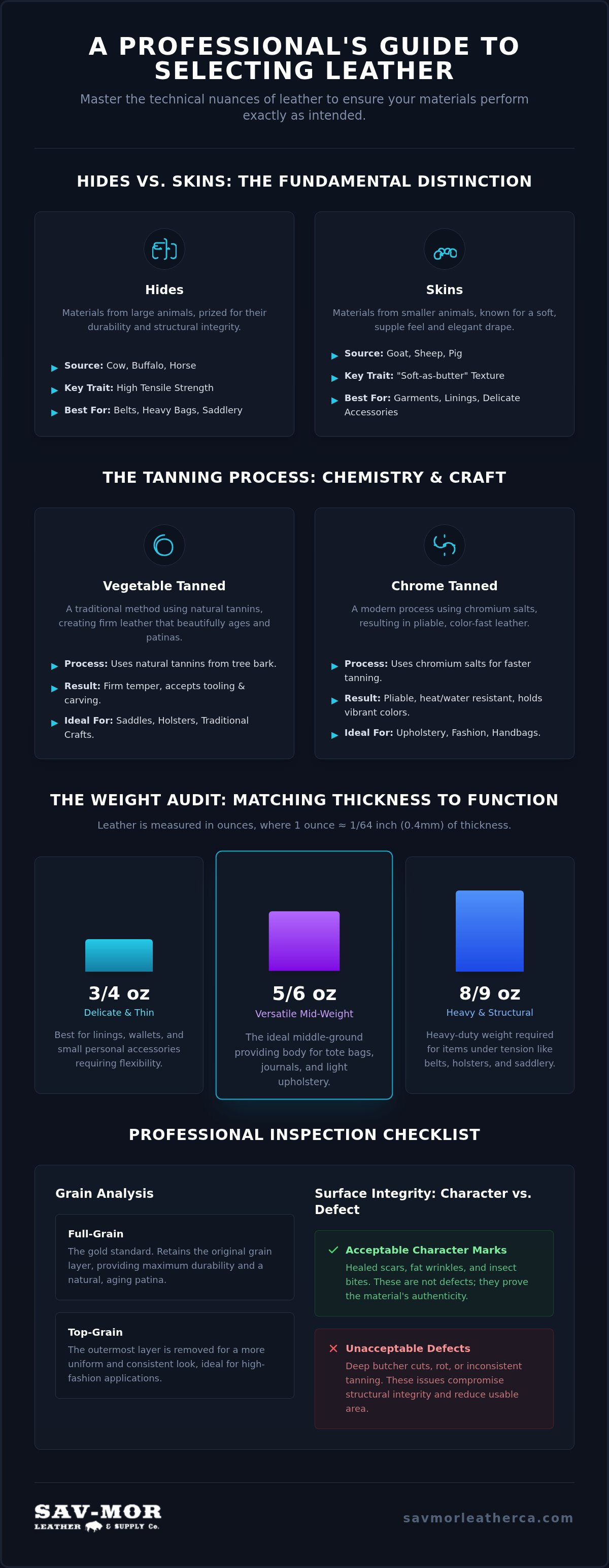
In the professional workshop, the distinction between a hide and a skin is a technical classification based on the size of the animal. Large animal materials, such as cow, buffalo, or horse, are referred to as hides. Smaller animals like goats, pigs, or sheep produce skins. This distinction directly impacts the yield and structural density of the material you’re purchasing. Cowhide remains the industry standard for durability, providing the tensile strength needed for belts and heavy bags. In contrast, sheepskin offers a “soft-as-butter” texture perfect for high-end garments and delicate accessories.
Vegetable Tanned vs. Chrome Tanned Hides
The leather tanning process determines how the material will age and react to your tools. Veg-tan leather utilizes natural tannins from tree bark, resulting in a firm material that accepts carving, tooling, and molding. It’s the essential choice for traditional saddle making or custom holsters. Chrome-tanned leather uses chromium salts to create a more pliable, heat-resistant product. It’s the preferred option for upholstery and fashion because it holds vibrant, designer colors and maintains a consistent, supple temper across the entire surface.
Professional makers must also consider yield when sourcing premium leather. While full hides offer the highest yield for large-scale projects, sides, shoulders, and bellies allow for more targeted sourcing. A full cowhide can reach 50 square feet, while a side is half that size, typically including the most prime portions of the animal. Understanding these cuts ensures you don’t overbuy or end up with excessive waste in the cutting process.
Specialty Skins for Professional Detail
Don’t overlook the utility of specialty skins in your inventory. Pigskin is a durable industry secret, often used for high-end linings because of its exceptional breathability and resistance to tearing. For projects requiring a luxury edge, exotic leather like ostrich or alligator skins provides unique textures that can’t be replicated. These materials allow artisans to elevate a standard design into a bespoke piece of art, adding value through rare grain patterns and premium tactile appeal.
The Professional Leather Hide Inspection Checklist
Inspecting a professional batch of hides requires a trained eye that looks beyond the initial aesthetic. You must perform a technical audit to ensure the material supports the structural integrity of your design. Start with grain analysis. Full-grain leather remains the gold standard because it retains the original grain layer, providing maximum durability and natural aging. Top-grain options offer a more uniform look by removing the outermost layer. This is often necessary for high-fashion applications where consistency is paramount.
Evaluating Leather Weight (The Ounce System)
Selecting the wrong weight can compromise a project’s functionality. Leather is measured in ounces, where one ounce equals approximately 1/64 of an inch in thickness. Explore these standard applications:
- 3/4 oz: Best for delicate linings, wallets, and small personal accessories.
- 5/6 oz: A versatile middle-ground that provides the necessary body for tote bags and light upholstery.
- 8/9 oz: Heavy-duty weight required for structural items like belts, holsters, and saddlery.
Identifying Natural Markings vs. Defects
Understanding the difference between character and damage is essential for maximizing your yield. According to U.S. leather industry standards, natural markings like healed scars, fat wrinkles, and insect bites aren’t considered defects. These marks prove the authenticity of the material. However, unacceptable defects include deep butcher cuts, rot, or inconsistent tanning. These issues reduce usable square footage and can cause structural failure under tension.
Evaluate the temper and hand of the hides before you finalize your purchase. A “soft-as-butter” feel is essential for garment-grade sheepskin, while a firm, stiff temper is required for molded leather used in utility gear. Once you’ve selected the perfect material, ensure you have the professional hardware necessary to finish your piece with a high-end, durable result.
Sourcing and Working with Wholesale Hides
Sourcing premium hides directly from a wholesale partner provides a distinct competitive edge for any serious workshop. When you buy at wholesale prices, you secure professional-grade materials at a lower cost per square foot. This directly improves your project margins. Sav-Mor Leather Supply acts as a master curator, offering a bridge between industrial tanneries and the independent maker. This relationship ensures you receive consistent quality without the retail markup found at hobby shops.
Success in the workshop depends on matching your material with the right tools. If you’ve selected a heavy 8/9 oz veg-tan, you’ll need the precision of C.S. Osborne or Craftool implements to handle the density. Finishing the vision requires the same level of technical scrutiny. Selecting Angelus or Fiebing dyes allows you to complement the raw grain of your leather with professional-grade color that won’t flake or peel over time. These products are the industry standard for a reason.
The Maker’s Toolkit: Hardware and Finishes
Find the right components to assemble your projects with confidence. Selecting professional leather hardware such as solid brass rivets and heavy-duty snaps ensures your work lasts for decades. For permanent bonds, use Barge adhesives followed by Fiebing finishes to seal the edges and protect the surface from moisture. These final touches transform a simple assembly into a professional-grade product that reflects the heritage of the craft.
Ordering Hides for National Delivery
Shipping large, heavy materials across the country requires specific logistical expertise. We ensure your hides are carefully rolled and shipped in heavy-duty tubes to prevent permanent creasing or grain damage during transit. This method preserves the “soft-as-butter” temper of garment skins and the pristine surface of tooling leather. Explore our curated leather collection to discover exclusive designer colors and finishes that set your work apart. Whether you’re in Los Angeles or elsewhere, nationwide shipping via UPS and FedEx brings premium wholesale materials directly to your bench.
Elevate Your Craft with Professional Grade Materials
Mastering the technical nuances of leather selection is the hallmark of a true artisan. By conducting a rigorous weight audit and understanding the specific utility of different species, you ensure every project begins with a foundation of quality. Whether you’re seeking the structural rigidity of heavy cowhide or the “soft-as-butter” drape of premium sheepskin, your choice of material dictates the longevity of your work. It’s the difference between a simple assembly and a professional-grade masterpiece that stands the test of time.
Sav-Mor Leather Supply has been a trusted partner to the maker community since 1970. As a family-owned business, we offer multi-generational expertise and wholesale pricing to both the public and professional crafters. We provide efficient nationwide shipping on all professional tools and hides, ensuring you have access to the best materials regardless of where your workshop is located. Our role as a master curator means every skin in our inventory is vetted for serious use.
Ready to begin your next professional build? Shop our curated collection of premium leather hides at wholesale prices. We look forward to seeing the exceptional pieces you create with our vetted inventory and your unique vision.
Frequently Asked Questions
What is the difference between a hide and a skin?
The distinction is based on the size and species of the animal. We use the term hides for large animals like cows or buffalo, which typically yield 50 square feet or more. Skins refer to smaller animals such as sheep, goats, or pigs. Hides generally offer more thickness and structural integrity, while skins are prized for their “soft-as-butter” drape in garment and lining applications.
How do I calculate how many hides I need for an upholstery project?
Multiply the number of linear yards required for fabric by 18 to determine the total square footage of leather needed. This calculation accounts for the irregular shapes of animal hides compared to consistent fabric bolts. Always include a waste factor of 15% to 25% to navigate natural variations and ensure you have enough prime material for large, uninterrupted panels.
Can I dye vegetable tanned leather myself?
Yes, vegetable tanned leather is the ideal canvas for custom coloring because its open pores readily absorb professional dyes. Use trusted brands like Fiebing or Angelus to achieve deep, consistent tones. Unlike chrome-tanned leather, which is often pre-sealed at the tannery, natural veg-tan allows you to control the final patina through various staining and antiquing techniques.
What does “oz” mean in leather thickness?
In the leather industry, “oz” is a measurement of thickness where 1 oz equals approximately 1/64 of an inch. For example, a 4 oz leather is 1/16 of an inch thick. This system helps you match the material to your project’s mechanical needs. A 3/4 oz weight is perfect for wallets, while an 8/9 oz weight provides the necessary rigidity for heavy-duty belts.
Are natural scars in a leather hide considered defects?
No, natural markings like healed scars, fat wrinkles, and insect bites are hallmarks of authentic full-grain leather. These features prove the material’s heritage and distinguish it from synthetic alternatives. Actual defects include deep butcher cuts, rot, or inconsistent tanning that compromises the leather’s strength. Professional artisans often incorporate natural markings to add character and “soul” to their bespoke pieces.
Do you offer wholesale pricing to the general public?
Yes, we provide wholesale pricing to everyone, ranging from professional designers to weekend hobbyists. We’ve operated as a master curator since 1970, ensuring all makers have access to premium materials without requiring a commercial license. You can browse our curated collections online and enjoy nationwide shipping on our full inventory of leathers, tools, and professional hardware.

Article by
Sav-Mor Leather Supply