
Most beginners believe they need a massive, hundred-piece starter kit to begin their journey, but the truth is that a curated selection of professional-grade tools is far more effective. When you ask yourself, “what do i need to start leatherworking,” the answer isn’t a mountain of cheap gear. It’s a foundational set of quality supplies that will grow with your skills. Since 1970, we’ve seen how the right materials make the difference between a project that looks like a prototype and one that feels like a masterpiece.
It’s completely normal to feel overwhelmed by the endless options of hides and hardware. You don’t want to waste money on the wrong weight of leather or tools that will fail after one use. This guide will clear that confusion. You’ll discover a professional-grade shopping list and expert insights on selecting the right materials for your first project. We’ll explore essential tools from trusted brands like C.S. Osborne, explain the nuances of veg-tanned hides, and help you launch your craft with the confidence of a seasoned maker.
Key Takeaways
- Identify why vegetable-tanned leather is the professional standard for beginners due to its firm temper and tooling capabilities.
- Uncover exactly what do i need to start leatherworking by focusing on the “Big Three” essential tools rather than bloated starter kits.
- Learn to distinguish between leather weights and types, from rugged cowhide to “soft-as-butter” garment sheepskin.
- Discover how to select professional hardware and high-grade adhesives to ensure your first project is built to last.
- Gain the confidence to start your journey with expert tips from a heritage supplier serving the maker community since 1970.
Selecting Your First Hides: Understanding Leather Types and Weights
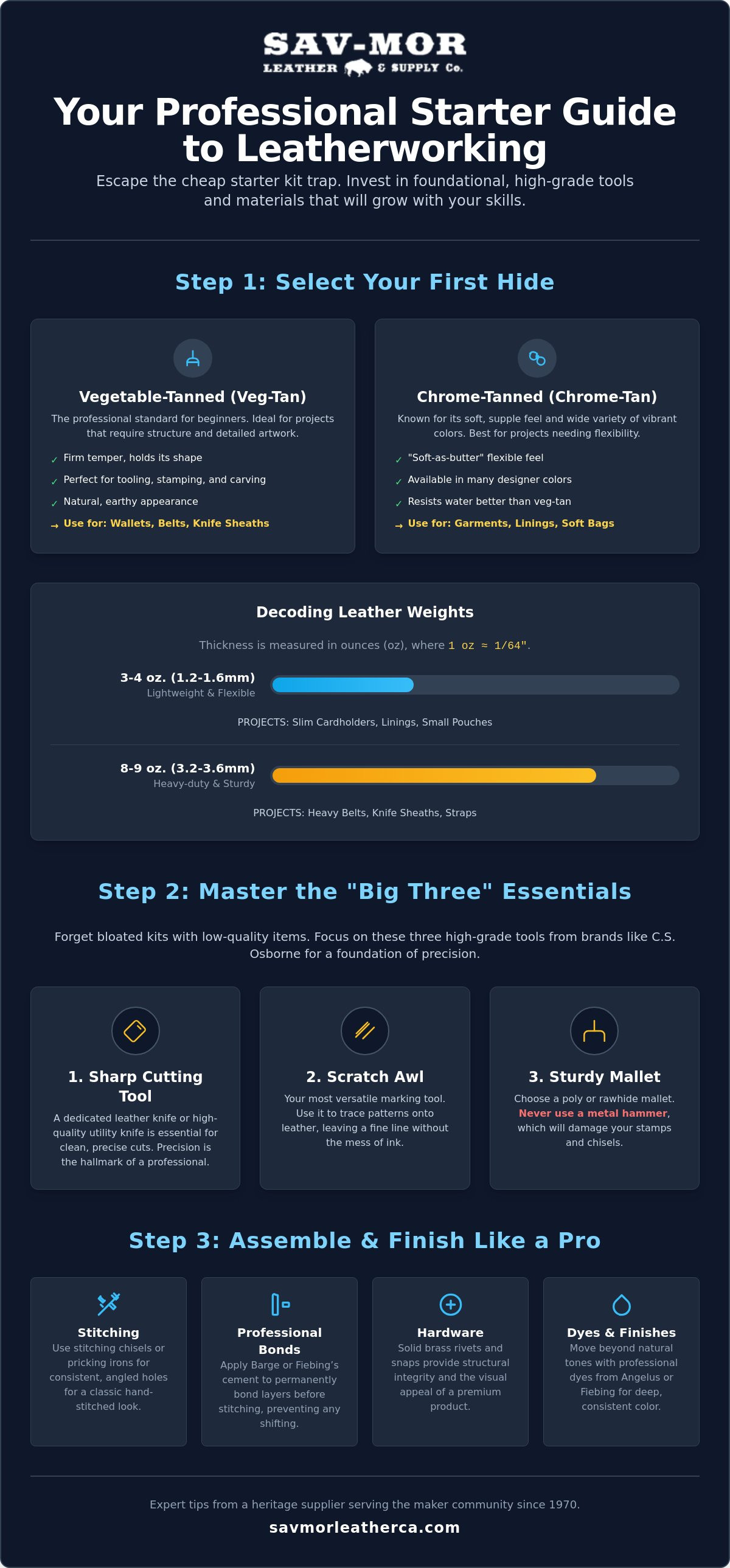
Selecting the right hide is the most critical decision for a new maker. It’s easy to get lost in the sea of options, but understanding the fundamental tanning processes will simplify your shopping list. When asking what do i need to start leatherworking, your first priority is matching the leather’s characteristics to your project’s function. Since 1970, we’ve helped artisans find the perfect match. Buying premium leather hides at wholesale prices allows you to practice on professional-grade material without exhausting your budget.
Veg-Tan vs. Chrome Tan: Which Should You Buy First?
Vegetable-tanned leather, or ‘veg-tan,’ is the gold standard for those learning essential leatherworking techniques like stamping and carving. It has a firm temper and a natural, earthy scent. Choose veg-tan for structured wallets or tooled belts. Conversely, chrome-tanned leather offers a ‘soft-as-butter’ feel and comes in vibrant designer colors. Explore chrome tan for garments, linings, or soft bags where flexibility is the primary requirement.
Decoding Leather Weights for Common Projects
In the industry, we measure leather by weight in ounces. Each ounce represents approximately 1/64th of an inch in thickness. This measurement is vital when deciding what do i need to start leatherworking for specific items. Just as precise millimeter measurements are crucial when selecting a diamond at Javda Jewelry, understanding these leather specs ensures your project turns out exactly as planned. For a slim cardholder, a 3/4 oz. weight provides the perfect balance of durability and thinness. Heavy-duty belts or knife sheaths require a sturdier 8/9 oz. hide. Beginners often find that ‘shoulders’ are the most economical cut. They provide a flat, consistent surface that minimizes waste while offering enough square footage for several small projects.
The Essential Leatherworking Toolset for Beginners
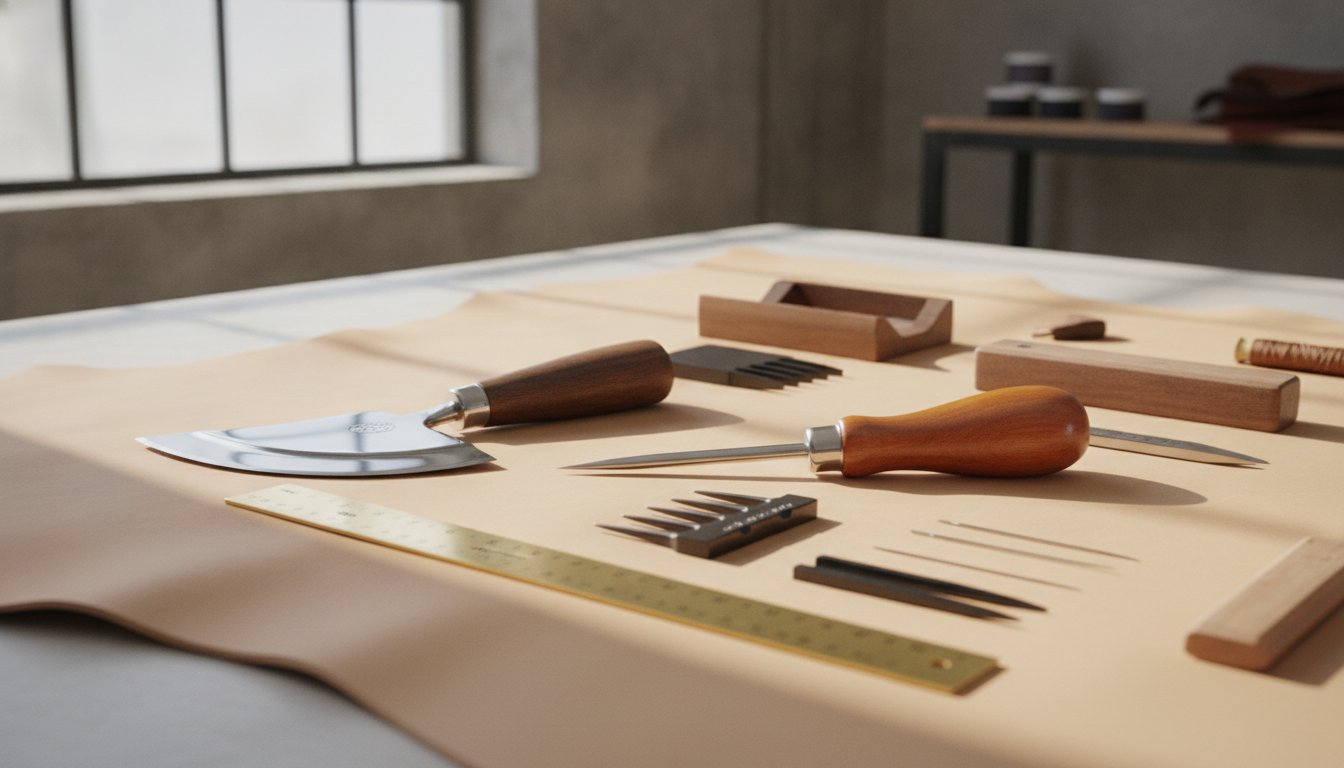
Many beginners fall into the trap of buying mass-market “starter kits” that contain dozens of low-quality items you will never use. These tools often feature inferior steel that dulls quickly, leading to frustration and jagged cuts. To truly answer what do i need to start leatherworking, focus instead on a curated foundation of high-grade equipment. Investing in professional leather tools from legacy brands like C.S. Osborne and Craftool ensures your gear lasts for decades rather than weeks.
Start your journey by mastering the “Big Three” essentials:
- A Sharp Cutting Tool: Precision is the hallmark of a professional maker.
- A Scratch Awl: This is your most versatile marking and piercing companion.
- A Sturdy Mallet: Choose a poly mallet or rawhide maul rather than a household hammer. Metal hammers will mushroom your stamps and destroy your chisels, while shock-absorbing mallets protect your tools and your hands.
Professional Cutting and Marking Tools
While a standard utility knife can handle basic straight lines, a dedicated leather knife provides the control necessary for intricate curves and skiving. Use a scratch awl to trace patterns directly onto the hide. It leaves a fine, visible line without the permanent mess of ink or lead. This level of precision is vital when you are first learning how to lay out a project to minimize waste.
Stitching and Assembly Essentials
Achieving the classic hand-stitched look requires stitching chisels or pricking irons. These tools create consistent, angled slits that allow for uniform thread placement. Pair these with John James needles and waxed thread to build seams that outlast any machine stitch. Always perform your assembly on a self-healing cutting mat to protect your blade’s edge and your workspace. Once your project takes shape, you can select the right leather hardware to provide the functional “jewelry” that completes a professional design.
Finishing Touches: Hardware, Dyes, and Professional Bonds
The final assembly is where your project transforms from a collection of parts into a professional piece of gear. When refining your list of what do i need to start leatherworking, don’t overlook the chemistry of the craft. High-quality adhesives like Barge or Fiebing’s leathercraft cement are necessary to create permanent bonds before you ever pick up a needle. These cements ensure your layers don’t shift during the stitching process. Once bonded, adding leather hardware such as solid brass rivets or snaps provides the structural integrity and visual appeal required for a premium result.
Custom colorwork allows you to move beyond the natural tones of veg-tan hides. Professional dyes from Angelus and Fiebing offer deep, consistent penetration. It’s a professional secret that the edge of a piece defines its quality. To achieve a smooth, retail-ready finish, use a wooden edge slicker paired with a burnishing compound. This friction-based process seals the leather fibers, creating a polished look that separates hobbyist work from professional craftsmanship.
Selecting Reliable Hardware and Adhesives
Choose solid brass or stainless steel hardware for any project intended to last. Plated alternatives often flake or corrode over time, undermining the durability of your premium hide. For high-stress areas like strap attachments, use rivets to reinforce your stitching. This combination ensures the piece can handle the daily rigors of use without failure. Since 1970, we’ve advised makers to prioritize these structural components to ensure their work stands the test of time.
Professional Dyes and Finishes for a Custom Look
Oil-based dyes typically offer more vibrant, lightfast results, while water-based options are easier to clean. When considering what do i need to start leatherworking in a modern workshop, stay informed on evolving regulations. As of mid-2026, at least 18 states, including California, have enacted restrictions on PFAS in consumer textiles. Choosing compliant finishes is now a standard part of the professional maker’s process. Always apply a final top coat to protect your work from moisture and UV damage, ensuring the “soft-as-butter” feel of your leather remains protected for years.
Master the Craft with Professional Grade Supplies
Building a successful leatherworking practice starts with a commitment to quality materials. You’ve learned that selecting the right hide weight and investing in the “Big Three” tools creates a foundation for excellence. Now that you understand what do i need to start leatherworking, you can avoid the common pitfalls of inferior kits and focus on professional results from your very first stitch. Whether you’re working with “soft-as-butter” sheepskin or heavy-duty cowhide, the right supplies make every cut more precise and every bond more permanent.
Since 1970, Sav-Mor Leather Supply has served as a master curator for the maker community. We provide access to premium brands like C.S. Osborne and Angelus at wholesale prices that were once reserved only for industry insiders. With nationwide shipping on all our professional hides and hardware, your next project is never out of reach. Explore our curated selection of professional leather and tools at Sav-Mor Leather Supply. Your journey into this heritage craft is just beginning, and we’re here to ensure you have everything needed to create something truly lasting.
Frequently Asked Questions
Is leatherworking an expensive hobby to start in 2026?
It’s entirely possible to begin without a massive investment if you prioritize quality over quantity. Instead of buying every tool available, focus on the specific gear needed for a single project. Many makers find that investing in a few professional tools from brands like C.S. Osborne is more cost-effective than replacing cheap alternatives that break. Don’t feel pressured to buy a full hide immediately; start with smaller cuts to keep your initial costs manageable.
Can I teach myself leatherworking at home?
Yes, leatherworking is an exceptionally accessible craft for self-taught artisans. When you’re researching what do i need to start leatherworking at home, the most important requirements are a stable work surface and a bit of patience. You can master foundational skills like saddle stitching and edge burnishing through practice on small pieces of veg-tan leather. Most modern makers develop their expertise by following professional tutorials and gradually tackling more complex patterns.
What is the easiest leather project for a total beginner?
Do I need a sewing machine for leatherworking?
You don’t need a sewing machine to produce high-end, professional leather goods. Most traditional artisans actually prefer hand-stitching because the saddle stitch is significantly stronger than a machine-made lockstitch. If a thread breaks in a hand-stitched seam, the rest of the stitch remains secure. Hand-stitching also allows for greater precision and gives your work the authentic, heritage quality that collectors and customers value.
Where can I buy leather hides at wholesale prices?
You can find premium hides at wholesale prices through heritage suppliers like Sav-Mor Leather Supply. We’ve been a family-owned resource since 1970, offering the public the same professional-grade cowhide, sheepskin, and exotic leathers used by major fashion houses. Part of knowing what do i need to start leatherworking is finding a trusted partner who provides curated collections and nationwide shipping on all essential materials and tools.

Article by
Sav-Mor Leather Supply