
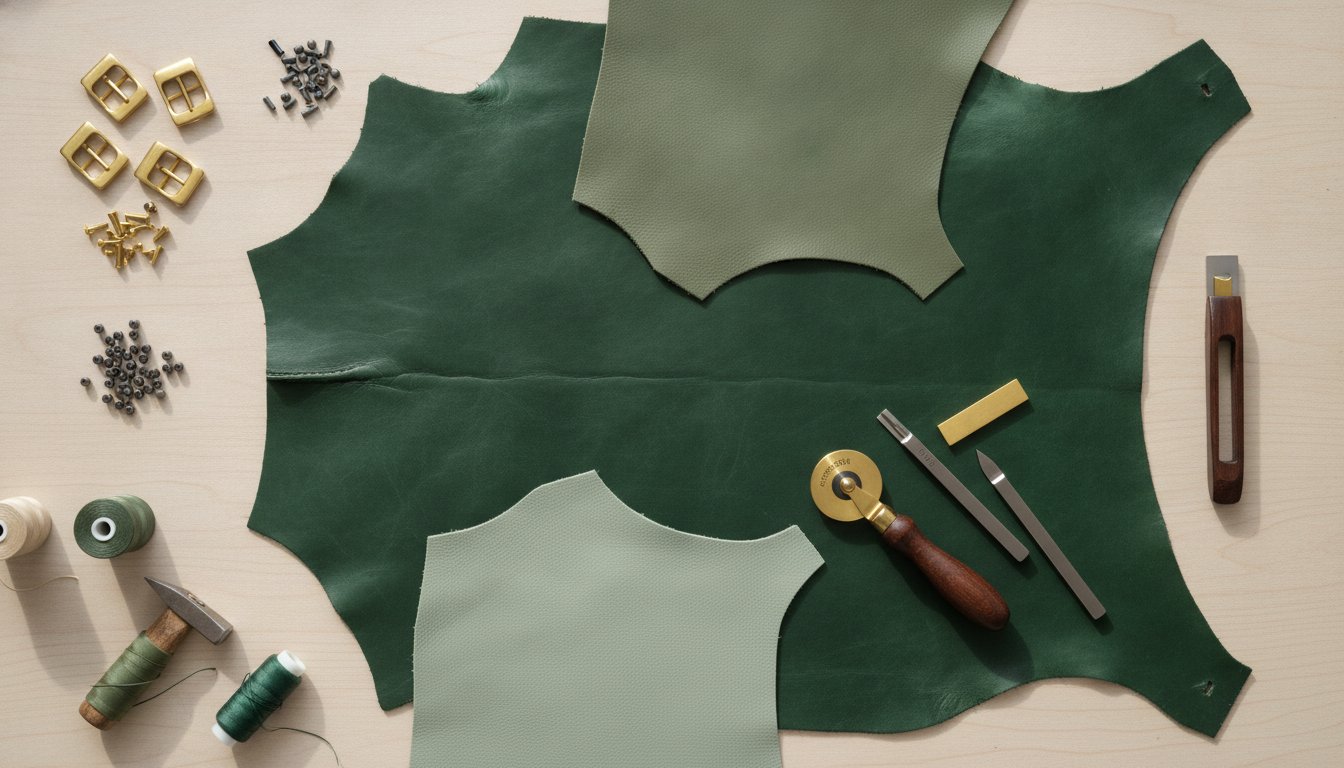
What if the most versatile color in your workshop isn’t black or mahogany, but a deep, mossy forest green? In 2026, green leather has transitioned from a specialty accent to a foundational neutral that bridges the gap between rugged utility and high-end fashion. You’ve likely noticed that finding consistent shades across different hide types can be a frustration. Whether you’re working with a soft-as-butter sheepskin or a sturdy 8/9 oz. cowhide, the nuance of the tone determines the professional quality of the final piece.
It’s understandable to feel uncertain about which hardware colors complement these modern earth tones or whether a chrome-tanned hide is better suited for your project than a traditional veg-tan. This guide will show you why green leather is the new neutral of 2026 and teach you how to select the perfect hide, tannage, and hardware for your next masterpiece. Explore the 2026 color palette, identify the best materials for specific designs, and master the professional finishing techniques that define a premium artisan product.
Key Takeaways
- Explore the 2026 shift toward organic earth tones and define the three core pillars of the green spectrum: Forest, Olive, and Sage.
- Compare the technical benefits of chrome-tanned versus vegetable-tanned green leather to ensure your project has the right durability and hand-feel.
- Determine the ideal hide weight for your application, from soft-as-butter 3/4 oz. skins for garments to professional-grade 8/9 oz. hides for structured goods.
- Find the most compatible hardware finishes and professional dyes to elevate your work and preserve the vibrancy of your finished masterpiece.
The Evolution of Green Leather: From Accent to New Neutral
The leather industry is witnessing a significant pivot in color theory as we move toward 2026. While black and brown remain staples, a sophisticated shift toward organic, earth-inspired palettes has elevated green leather to a foundational status. It’s no longer just a “pop of color.” Instead, it’s replacing traditional navy and grey as a versatile neutral that feels both modern and timeless. Professional makers find that these shades offer a tactile depth that synthetic colors often lack, especially when applied to high-quality cowhide or sheepskin.
This shift toward organic palettes is also influencing the broader fashion and beauty world; to coordinate your bespoke leather accessories with high-street trends, you can learn more about Fabulous Looks and their range of branded cosmetics that perfectly match these 2026 tones.
The 2026 Palette: Forest, Olive, and Sage
Understanding the spectrum is essential for any maker. Each shade serves a specific functional and aesthetic purpose. Explore these three core pillars to define your project’s direction:
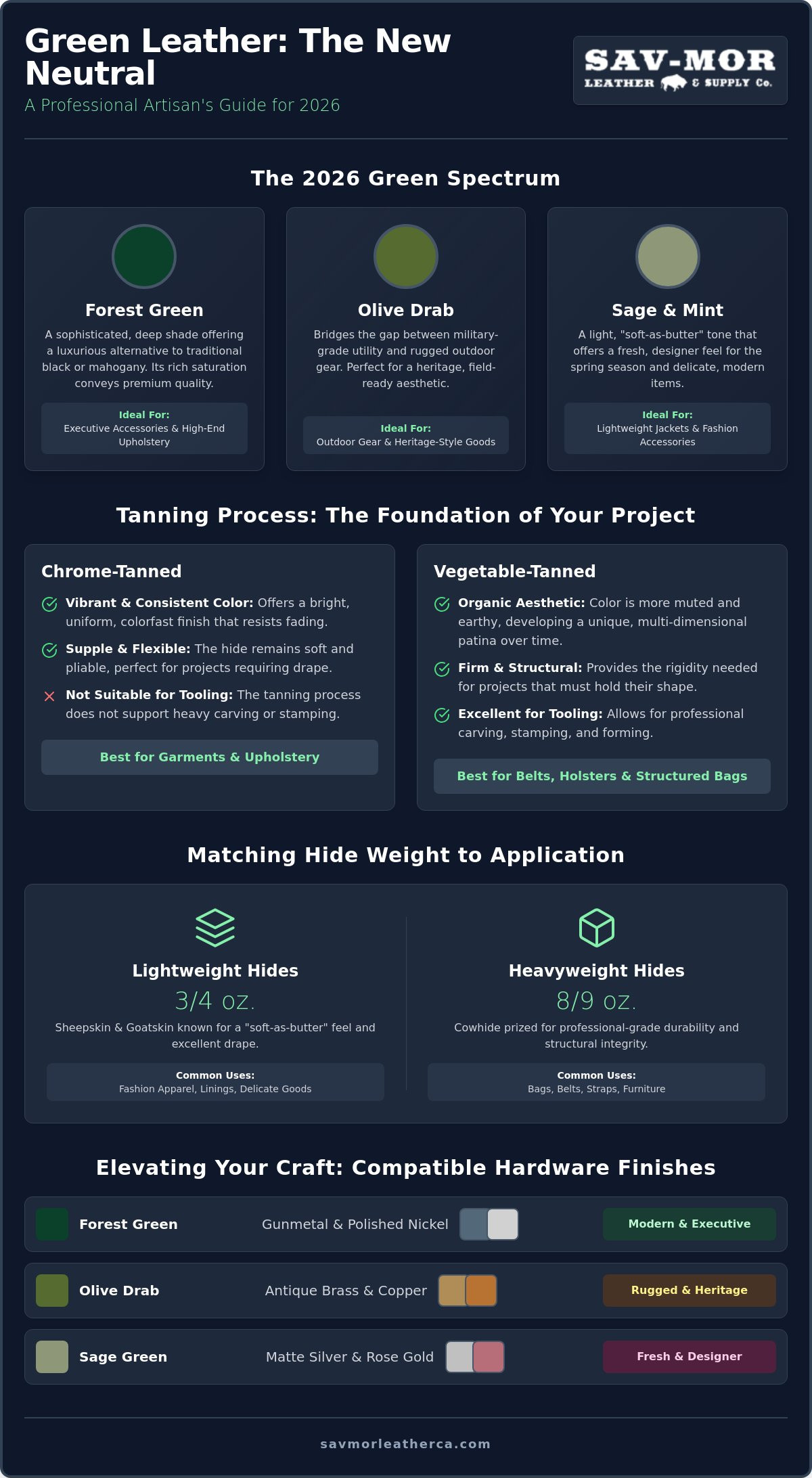
- Forest Green: This is the sophisticated choice for high-end upholstery and executive accessories. Its deep saturation provides a luxurious alternative to traditional black or mahogany.
- Olive Drab: This shade bridges the gap between military-grade utility and rugged outdoor gear. It pairs exceptionally well with brass hardware for a heritage, field-ready look—a style that resonates with the bold, veteran-owned ethos of Another DAMM Find.
- Sage and Mint: These lighter, “soft-as-butter” garment leathers are perfect for the spring season. They offer a fresh, designer feel for lightweight jackets or delicate accessories.
Why Artisans are Choosing Green for Professional Commissions
Market demand for unique, non-traditional colors in bespoke leatherwork is at an all-time high. Clients want pieces that stand out without appearing gaudy. Green leather achieves this balance perfectly. The specific leather tanning process used for these hides influences how the color settles into the grain. Unlike standard browns that may simply darken, green hides often develop a complex, multi-dimensional patina over time. This aging process adds a layer of character that is highly sought after in custom commissions. Shop our curated leather collection to find the exact shade and weight for your next professional build.
Technical Selection: Tanning Processes and Hide Types
Choosing the right green leather requires a technical understanding of how different tanning methods accept pigment. Chrome-tanned hides are the industry standard for consistency. They offer a vibrant, colorfast finish that resists fading over time. In contrast, vegetable-tanned hides provide a more organic aesthetic. While the green may appear more muted or earthy in a veg-tan, these hides allow for professional tooling and carving that chrome-tanned options cannot support. The choice of tanning significantly impacts the final hand-feel and how the color will evolve.
Chrome Tan vs. Veg-Tan Green Hides
Chrome tanning is the preferred choice for artisans focused on supple, garment-weight projects. This process ensures the hide remains flexible and the color stays uniform across the entire surface. If you’re looking for specific leather hides with a matte or gloss finish, chrome tan is likely your best bet. Conversely, veg-tan hides are essential for structural projects like belts or holsters. Artisans should also stay informed on the environmental impact of leather tanning to ensure their sourcing aligns with modern industry standards.
Selecting the Right Hide for Your Application
Weight is the next critical factor for a successful build. A 3/4 oz. sheepskin or goatskin is ideal for fashion-forward apparel, offering that signature “soft-as-butter” feel. For professional commissions requiring durability, such as bags or furniture, a 8/9 oz. cowhide is the standard. Cowhide takes green dyes exceptionally well, maintaining a deep saturation even through heavy use. Pigskin and exotic leathers also offer unique textures. These often require specialized finishes to lock in the green hue. Once you’ve selected your hide, find the professional hardware necessary to complement your design’s specific green tone.
Elevating Green Leather with Professional Hardware and Finishes
The final stage of any project involves selecting the accents that define the finished aesthetic. Green leather requires a deliberate approach to hardware and edge work to ensure the piece looks professional rather than dated. Because green sits between cool and warm tones, your choice of metal can completely change the character of the hide. You’ve already selected the weight and tanning process; now you must focus on the assembly details that signal high-end craftsmanship.
Hardware Pairing: Gold, Brass, or Gunmetal?
Selecting the right metal is a critical decision for any artisan. Antique brass is the classic choice for Olive and Forest green heritage projects. It highlights the earthy undertones of the hide and lends an air of traditional quality. For a more modern, industrial look, pair Sage or Emerald hides with nickel or gunmetal. These cooler metals provide a crisp contrast that suits contemporary designer accessories. Shop our Professional Leather Hardware for the perfect match to your specific hide.
Finishing Touches: Dyes, Glues, and Edges
Edges on colored hides require precision. Use professional dyes from trusted brands like Fiebing or Angelus to touch up edges without ruining the green base. When burnishing, apply a light coat of gum tragacanth or a dedicated edge paint to seal the fibers. Choosing the right thread and lacing is equally essential for a cohesive aesthetic. A tonal green thread offers a clean look, while a contrasting cream or tan can highlight the construction of a rugged outdoor bag.
Use this checklist to ensure your green leather goods meet professional standards:
- Verify color consistency across all cut pieces before assembly.
- Select hardware that complements the hide’s specific undertone (warm vs. cool).
- Test edge dyes on a scrap piece to ensure the pigment doesn’t bleed into the grain.
- Apply a final professional finish to lock in vibrancy and prevent moisture damage.
Master the Modern Neutral in Your Next Build
The transition of green leather from a specialty accent to a foundational neutral offers artisans a unique opportunity to create timeless, high-end goods. By understanding the technical differences between chrome and vegetable tanning, you can select the exact hide weight required for structural integrity or garment-weight flexibility. Whether you’re choosing a deep Forest cowhide for upholstery or a “soft-as-butter” Sage sheepskin for fashion, the success of your project depends on the harmony between materials and hardware.
Sav-Mor Leather Supply has provided family-owned expertise to the maker community since 1970. We offer a premium curated selection of hides and professional tools to ensure your masterpiece stands the test of time. Take advantage of our wholesale pricing for all artisans and find the essential components needed for your professional workshop. Upgrade your project with professional-grade Hardware to ensure every buckle and rivet complements your chosen earth tone perfectly. We look forward to seeing the incredible pieces you build with these sophisticated modern palettes.
Frequently Asked Questions
Does green leather fade faster than brown or black leather?
No, green leather doesn’t inherently fade faster than traditional shades. Lightfastness depends on the tanning method and the quality of the dyes used during production. Chrome-tanned hides are designed for superior color retention; they offer excellent resistance to UV exposure. Applying a professional finish will further protect the pigment and ensure the hide maintains its vibrancy over years of regular use.
Can I tool and stamp green vegetable-tanned leather?
You can tool and stamp green vegetable-tanned hides as long as they aren’t chrome-tanned. While pre-dyed leathers may take slightly longer to case with water, they still hold crisp impressions and detailed carving. It’s an ideal way to merge contemporary designer colors with classic leatherworking skills. Always test your stamps on a scrap piece first to gauge the specific moisture level needed for the best results.
What color hardware looks best with olive green leather?
Antique brass and polished gold are the most complementary hardware choices for olive tones. These metals enhance the warm, organic feel of the hide and provide a sophisticated heritage look. If you prefer a modern aesthetic, gunmetal or matte black finishes offer a striking industrial contrast. The choice of hardware ultimately determines whether the finished piece feels traditional or contemporary in its final application.
Is green leather suitable for outdoor or high-traffic upholstery?
Yes, green leather is highly suitable for high-traffic upholstery when you choose a durable cowhide. Select a protected or semi-aniline hide to ensure the surface resists stains and abrasions in busy environments like living rooms or offices. For outdoor use, verify that the leather has been treated with specific weather-resistant finishes. These professional-grade materials ensure your project remains functional and beautiful even under heavy daily wear.

Article by
Sav-Mor Leather Supply