
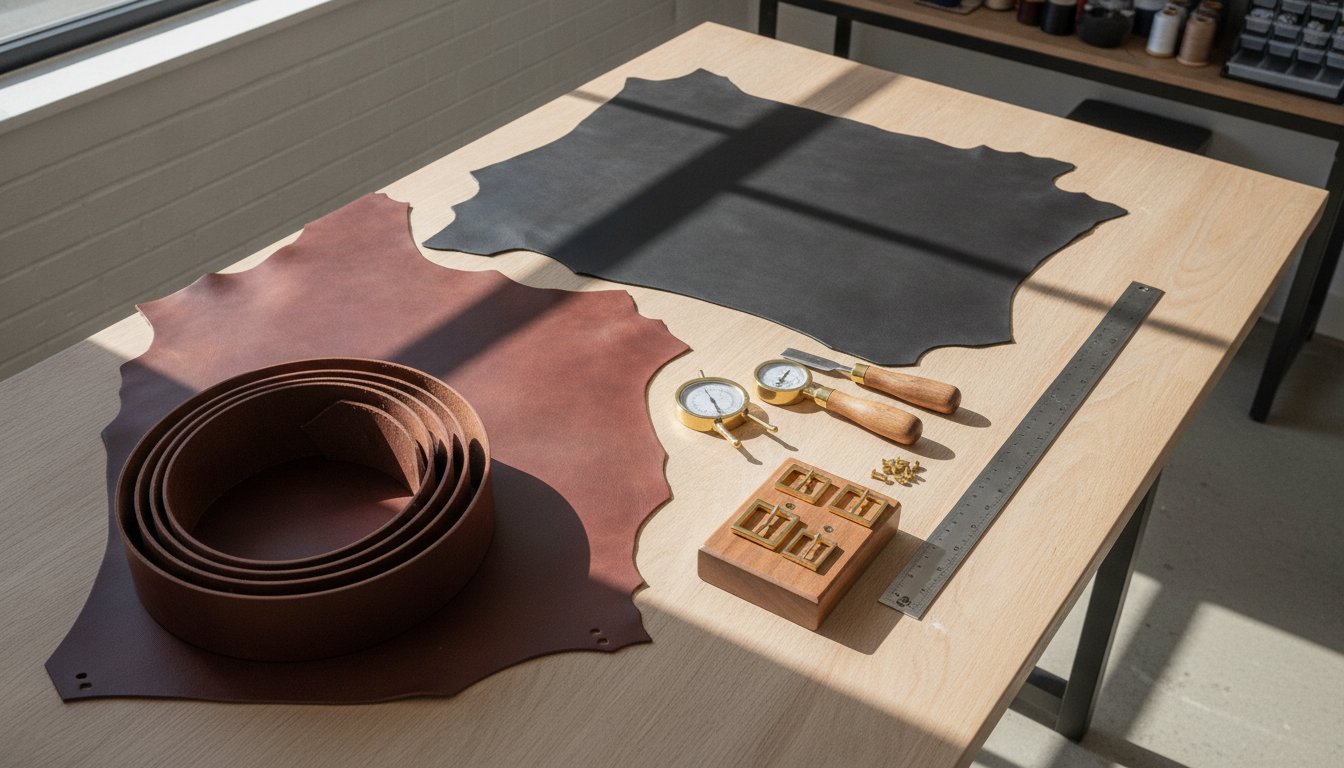
Is that “premium” hide actually a high-grade material, or just a clever marketing term designed to hide a corrected grain? It’s frustrating to invest your money and hours of labor into a project only to realize the leather is too thin for a sturdy belt or far too stiff for a “soft-as-butter” garment. You aren’t alone if you’ve felt overwhelmed by the technical gap between 3/4 oz. and 8/9 oz. hides. Mastering the art of understanding leather grades and weights is the only way to ensure your materials match your vision and provide the durability your customers expect.
We promise to turn that confusion into professional clarity. You’ll learn to select the perfect hide for any application, from rugged veg-tan shoulders to supple chrome-tan skins. We will explore the technical specifications of tanning, show you how to read a weight chart with ease, and explain which hardware, like rivets and conchos, pairs best with specific hide thicknesses.
Key Takeaways
- Distinguish between vegetable and chrome tanning to choose between the rugged structure of veg-tan shoulders and the “soft-as-butter” feel of chrome-tanned garment leathers.
- Master understanding leather grades and weights by applying the 1/64-inch rule to accurately measure thickness from 3/4 oz. linings to 8/9 oz. heavy-duty belts.
- Identify the ideal hide origin for your project, utilizing durable cowhide for professional-grade upholstery or supple exotic skins for high-end fashion accessories.
- Learn to pair specific hide weights with professional hardware like rivets, buckles, and conchos to ensure structural integrity and a polished finish.
Decoding Leather Materials: Tanning Processes and Hide Origins
Selecting the right hide starts with its origin. Cowhide remains the industry standard because it balances durability with a surface that adapts to everything from heavy-duty gear to luxury upholstery. For a comprehensive overview of leather, you must look beyond cattle to find specific textures. Goatskin offers surprising resilience for its thickness. Sheepskin provides an unmatched softness for high-end accessories. Pigskin serves as the professional-grade choice for linings, adding essential structure without adding unnecessary bulk.
Veg-Tan vs. Chrome-Tan: Choosing the Right Chemistry
Tanning chemistry defines how a hide behaves under your tools. Vegetable Tanned leather uses organic tannins to create a rigid, sturdy material. It is the essential choice for tooling, stamping, or carving. If you want full creative control, find undyed veg-tanned leather shoulders. These premium pieces allow you to apply professional dyes from trusted brands like Angelus or Fiebing for a bespoke finish. This level of customization is a hallmark of a professional workshop.
Chrome Tanned leather suits different needs. This chemical process creates “soft-as-butter” garment leather available in designer colors. It is perfect for apparel where drape and flexibility are the priority. Understanding leather grades and weights helps you avoid using a stiff veg-tan when a supple chrome-tan is required. Explore our curated leather collections to find the exact material your next project demands. Mastery of these materials separates the hobbyist from the professional artisan.
Navigating Leather Weights: Understanding Thickness and Project Suitability
Understanding leather grades and weights is essential for project longevity. In the industry, we measure thickness in “ounces,” where 1 oz equals approximately 1/64 of an inch. This precision ensures you don’t pick a hide that’s too flimsy for its purpose. For example, 3/4 oz. leathers are perfect for wallets and linings. Conversely, 8/9 oz. hides provide the heft required for heavy-duty belts and holsters. Selecting the correct weight maintains structural integrity, especially when you need to support professional leather hardware like heavy buckles, rivets, or o-rings without the material stretching or failing over time.
Beyond thickness, the classification of the hide surface impacts your final results. As detailed in the University of Cincinnati Leather Grades research, surface characteristics dictate how a hide accepts finishes and resists wear. Mastering these details is the core of understanding leather grades and weights for any serious artisan. For the best professional results, source premium leather hides that match your specific project requirements. Choosing the right cut from the hide is the final step in this selection process.
Anatomy of a Hide: Shoulders, Sides, and Bellies
The cut you choose is as vital as the weight. Shoulders are the densest part of the hide. They’re the premier choice for high-pressure tooling and carving. Sides offer a versatile, large surface area for upholstery and fashion garments. Bellies are cost-effective options for smaller accessories or practice pieces. Each section serves a specific purpose in a professional workshop.

Professional Integration: Pairing Hides with Hardware and Finishes
Professional results require more than just the right hide; they demand a synergy between material and assembly. When working on upholstery or interior design projects, find durable cowhide in designer colors to ensure furniture longevity. For apparel, utilize “soft-as-butter” garment leather in trending fashion colors. These materials provide the specific drape and aesthetic needed for high-end clothing. Understanding leather grades and weights ensures you don’t over-specify or under-spec for these distinct applications. For deeper insights into sourcing, read our Premium Leather Hides: Professional Buyer’s Guide 2026.
The Artisan’s Toolkit: Essential Hardware and Finishing
Assemble your projects with precision by pairing the right hide with essential hardware. We recommend using heavy-duty buckles, rivets, o-rings, snaps, and conchos for functional items. Explore hardware options to find the perfect match for your hide’s thickness. Working with 8/9 oz. leathers requires specialized leatherworking tools from legacy brands like C.S. Osborne or Craftool. These premium tools ensure clean holes and burnished edges that standard hobbyist blades simply cannot achieve.
Complete your work with professional-grade dyes and cements. Brands like Fiebing and Angelus offer the pigments necessary for custom finishes, while Barge cement provides the permanent bond required for serious structural integrity. Mastery of these final components is the ultimate step in understanding leather grades and weights for the professional maker. By selecting the right tools for your specific hide weight, you protect the material and your reputation.
Elevate Your Craft with Professional Materials
Mastering the technical side of your materials is the first step toward professional-grade results. You now have a foundation for understanding leather grades and weights, ensuring every hide you select matches your project’s structural needs. From choosing between rigid veg-tan shoulders and “soft-as-butter” garment skins to pairing 8/9 oz. hides with the correct hardware, these decisions define the quality of your finished work.
Sav-Mor Leather Supply has supported the maker community with family-owned expertise since 1970. We offer wholesale pricing to all artisans and provide nationwide shipping on our entire inventory of hides, tools, and hardware. Shop Professional Leather Hardware and Premium Hides at Sav-Mor Leather Supply to find the essential components for your next creation. We’re proud to be your partner in the workshop. Build with confidence and create something that stands the test of time.
Frequently Asked Questions
What is the best leather weight for making a durable belt?
Select an 8/9 oz. cowhide for a professional, durable belt that won’t stretch or warp over time. This specific thickness provides the structural integrity needed to support heavy buckles and daily wear. While you can use 6/7 oz. for lighter dress belts, the 8/9 oz. range remains the industry benchmark for longevity and a high-end feel in traditional leatherwork.
Can I use vegetable tanned leather for making clothing?
You can use thin vegetable tanned leather for structured items like vests or armor, but it’s generally too rigid for standard apparel. For most clothing projects, chrome-tan is the superior choice. It offers that “soft-as-butter” drape and flexibility required for comfortable garments. Understanding leather grades and weights ensures you don’t pick a stiff veg-tan shoulder for a project that needs fluid movement.
What is the difference between full grain and top grain leather materials?
Full grain leather includes the entire natural grain of the hide, making it the most durable and breathable grade available. Top grain leather has been sanded or buffed to remove surface imperfections. This results in a more uniform look but reduced structural strength. Professionals prioritize full grain for its longevity and its ability to develop a rich, organic patina that corrected materials cannot replicate.
How do I choose the right rivets and snaps for my leather weight?
Match your rivet or snap post length to the total thickness of your leather layers. The post should extend about 1/16 of an inch beyond the material to allow for a secure set. When understanding leather grades and weights, remember that stacking heavy 8/9 oz. leather for conchos or buckles requires extra-long hardware to ensure the fastener doesn’t pull through or fail under pressure.

Article by
Sav-Mor Leather Supply