
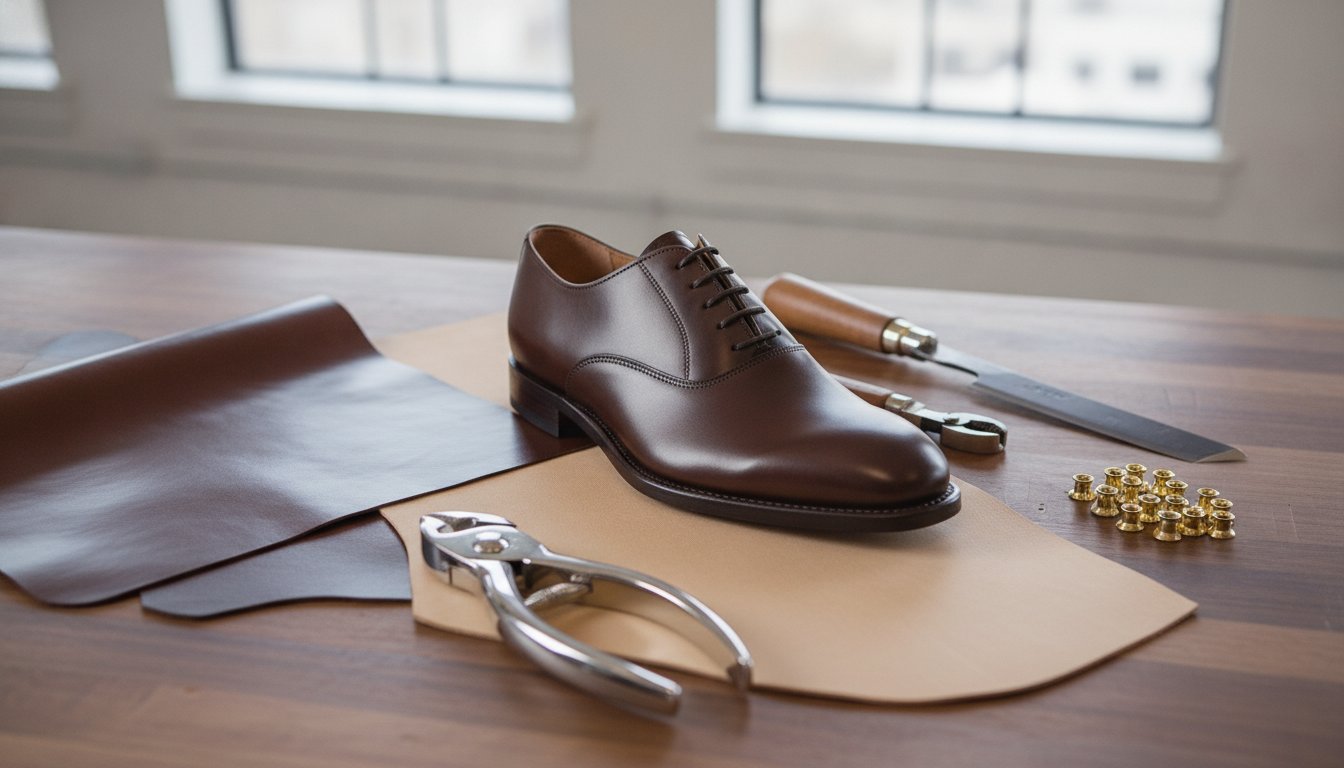
The success of your footwear project doesn’t start at the sewing machine; it begins with the specific hide you select for your bench. Selecting the right leather for making shoes is a strategic layering process where the tanning method determines longevity and the weight determines comfort. It’s frustrating to stare at a beautiful side of veg-tanned leather and wonder if 4 oz is too stiff for a derby upper or better suited for a light insole. You’re likely tired of the confusion between ounces and millimeters or the fear of wasting premium material on a build that won’t hold its shape.
Master the art of selecting the perfect hide, weight, and finish for any footwear project with this professional resource. We’ve curated this guide to give you a clear understanding of shoe leather categories, from soft-as-butter pigskin linings to rugged cowhide outsoles. You’ll also find a comprehensive list of essential tools and hardware, including industry standards like C.S. Osborne pincers and professional Fiebing dyes. By the end, you’ll have the technical knowledge and confidence to start your next pair of shoes with professional precision.
Key Takeaways
- Discover why chrome-tanned leather is the professional choice for supple uppers while vegetable-tanned hides provide the necessary structure for soles.
- Master the weight selection process to find the perfect leather for making shoes, distinguishing between 3/4 oz decorative overlays and heavy-duty 5/6 oz boot uppers.
- Identify the essential professional tools from legacy brands like C.S. Osborne required to achieve clean, artisan-quality cuts and carves.
- Explore the curated selection of leather hardware, such as rivets and eyelets, needed to provide structural integrity and a premium finish to your footwear.
Understanding Tanning Methods and Leather Types for Footwear
The foundation of any high-quality footwear project rests on the tanning method you choose. Selecting the right premium leather isn’t just about color; it’s about matching the chemical properties of the hide to the mechanical needs of the shoe. Whether you’re building a rugged work boot or a delicate dress shoe, the leather for making shoes must be chosen based on its ability to breathe, hold its shape, and resist the elements.
Chrome vs. Vegetable Tanning: Which Wins for Your Project?
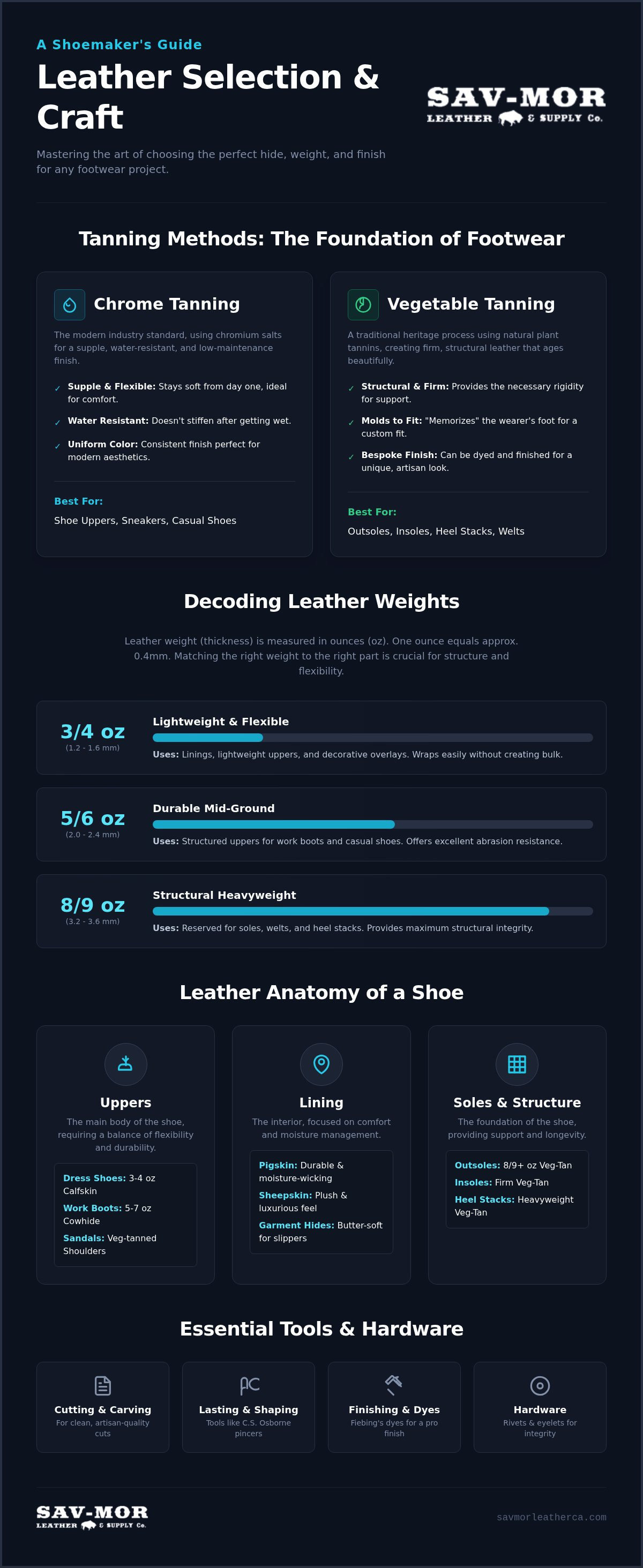
Chrome tanning is the industry standard for uppers. It uses chromium salts to produce a hide that is supple, uniform, and highly resistant to water. These hides require very little maintenance and don’t stiffen after getting wet, which is why they’re the go-to for modern sneakers and casual shoes. If you’re looking for a material that stays flexible from day one, chrome-tanned cowhide is your best bet.
Vegetable tanning, by contrast, is a traditional heritage process that uses natural plant tannins. This results in a firmer, more structural leather that is essential for outsoles, insoles, and heel stacks. Veg-tanned leather has a unique ability to “memorize” the shape of the wearer’s foot, providing a custom fit that chrome-tanned alternatives can’t match. For a deeper look at how these tanning agents interact with animal fibers, you can explore a comprehensive guide to leather.
The Role of Lining Leathers
The interior of a shoe is a high-friction environment that deals with constant moisture. Professional artisans use specific hides for linings to ensure longevity and comfort:
- Pigskin: This is the workhorse of the industry. It’s incredibly durable, thin, and features natural pores that provide excellent moisture-wicking properties.
- Sheepskin: Often used in luxury footwear, sheepskin is prized for its plush feel. It adds a layer of high-end comfort that makes a shoe feel premium the moment it’s slipped on.
For specialized projects like luxury slippers or traditional moccasins, you might even consider garment-grade hides. These “soft-as-butter” materials offer maximum flexibility and a tactile beauty that heavier boot leathers lack. While they don’t provide the structural support needed for a heavy sole, they’re perfect for footwear where comfort is the primary objective.
Selecting the Right Weights for Shoe Soles and Uppers
Building a shoe is a strategic layering process. You don’t use the same thickness for the tongue as you do for the heel counter. Choosing the right weight of leather for making shoes ensures the vamp remains flexible while the sole provides a rigid foundation. Leather weight is typically measured in ounces per square foot, where one ounce equals approximately 0.4 millimeters. Getting this balance right prevents the footwear from being too stiff to walk in or too soft to maintain its shape.
- The 3/4 oz. Standard: This weight is approximately 1.2 to 1.6 mm thick. It’s the ideal choice for lightweight uppers, linings, and decorative overlays. It wraps easily around a last without creating bulk.
- The 5/6 oz. Middle Ground: Measuring roughly 2.0 to 2.4 mm, this weight is perfect for durable work boots and structured casual shoes. It offers the abrasion resistance needed for daily wear.
- The 8/9 oz. Heavyweight: These thick hides are reserved for shoe soles, welts, and heel stacks. They provide the structural integrity required to support the wearer’s weight over time.
Material Requirements by Shoe Style
Boots require a more substantial build, often utilizing 5 to 7 oz cowhide for the upper to protect the ankle and provide support. For dress shoes, focus on calfskin or fine-grain cowhide in the 3 to 4 oz range. This weight allows for a sleek finish and takes a high polish beautifully. When making sandals, utilize veg-tanned shoulders for the straps. This specific cut has a tight fiber structure, meaning the straps won’t stretch out or lose their fit after a few weeks of wear.
Sourcing Shoe Soles and Structural Pieces
Veg-tanned shoulders are the primary choice for durable soles because they offer a balance of firmness and flexibility. We stock undyed veg-tan options, which allow you to apply custom stains or finishes for a truly bespoke look. Once you’ve selected your hide, find the right leather hardware like solid brass buckles or rivets to secure your assembly and ensure the finished product stands up to years of use.
Essential Tools and Hardware for Professional Shoemaking
Selecting the right leather for making shoes is only half the battle. To transform a flat hide into a three-dimensional masterpiece, you need a curated set of professional instruments. Relying on generic craft blades often leads to jagged edges and compromised structural integrity. Professional results require a kit that respects the heritage of the craft while providing the precision needed for modern design.
Invest in premium leather tools from legacy brands like C.S. Osborne and Craftool. These manufacturers provide the industry standard for skiving and cutting, ensuring your work remains clean and accurate. Beyond the blade, securing the build requires high-quality leather hardware. From solid brass buckles for monk straps to heavy-duty eyelets for work boots, your choice in hardware dictates the longevity and aesthetic appeal of the finished pair.
For the final assembly, bonds must be permanent. Barge and Fiebing cements are non-negotiable for sole attachment because they withstand the constant flexing of a walking foot. Once the structure is sound, use Angelus and Fiebing dyes to achieve trending fashion colors or classic saddle tans. These professional finishes do more than add color; they provide a protective barrier against weather and daily wear.
The Cordwainer’s Tool Kit
A professional kit includes lasting pincers for pulling leather over the last, stitching awls for hand-sewing welts, and specialized skiving knives. A sharp skiving knife is the most critical tool for creating seamless leather joins because it allows you to taper edges so they overlap without adding unnecessary bulk. Without this precision, the interior of the shoe will have uncomfortable ridges that ruin the fit.
Color and Protection
Finalizing your project involves more than just assembly. If you’re working on sneaker customization or modern footwear design, Angelus paints offer the flexibility and adhesion needed for vibrant, crack-resistant results. For traditional builds, applying a professional finish protects the leather for making shoes from moisture and salt. Proper finishing ensures that the “soft-as-butter” feel of your lining and the rugged durability of your upper remain intact for years to come.
Start Your Footwear Project with Professional Precision
Selecting the ideal leather for making shoes is a skill that evolves with every pair you last. You’ve learned how to strategically layer your build, from choosing “soft-as-butter” linings to selecting the heavy 8/9 oz veg-tanned shoulders required for durable outsoles. By matching the specific tanning method to each component’s function, you ensure your footwear offers both immediate comfort and long-term structural integrity. Don’t let the fear of technical weights or specialized tools hold back your creativity.
Sav-Mor Leather Supply is your dedicated partner in the maker community, offering multi-generational expertise since 1970. We provide wholesale prices on all professional hides and stock a curated collection of C.S. Osborne tools and Angelus finishes. With nationwide shipping across the United States, the high-end materials you need are always within reach. Shop Premium Leather Hides and Shoemaking Supplies at Sav-Mor to find the essential hardware and hides for your next build. Your dedication to the craft deserves a foundation of quality; it’s time to bring your vision to life.
Frequently Asked Questions
What is the best leather for a beginner making their first pair of shoes?
Start with a 3 to 4 oz chrome-tanned cowhide for your first project. This specific weight is flexible enough to pull over a last by hand without requiring industrial lasting machines. It’s forgiving during the assembly process and provides a professional finish even for those still mastering their skiving technique. Choosing a consistent, medium-weight hide helps you focus on the construction rather than fighting a stiff material.
Can I use upholstery leather for making shoes?
Avoid using upholstery leather for the structural parts of your footwear. While it often feels soft-as-butter, it’s engineered for furniture and lacks the tight fiber density required to hold a shoe’s shape over time. If you use it for uppers, the shoe will likely over-stretch and lose its silhouette within a few weeks of wear. Reserve upholstery hides for non-structural decorative overlays or very light tongue padding.
How much leather do I need to buy for a standard pair of boots?
Plan to purchase approximately 5 to 7 square feet of upper leather for a standard pair of mid-height boots. It’s wise to buy a larger side or half-hide to ensure you have enough clear space to avoid natural scars, brands, or loose grain. This extra material also provides a safety net if a pattern piece is cut incorrectly. Remember to account for additional pigskin for the lining and heavy veg-tanned shoulders for the soles.
What is the difference between shoe soles leather and upper leather?
The primary difference lies in the tanning method and the weight of the hide. Upper leather for making shoes is typically 3 to 5 oz and tanned for flexibility and water resistance. Sole leather is a heavy-duty vegetable-tanned material, often 9 to 12 oz, designed to resist abrasion and provide a rigid foundation. While uppers must bend with the foot, the sole leather is compressed during the tanning process to ensure it remains firm and durable against the pavement.

Article by
Sav-Mor Leather Supply