

Did you know that a single side of premium leather can generate over $3,400 in revenue when crafted into the right minimalist goods? In a global market projected to reach nearly $480 billion by the end of 2026, the difference between a struggling hobbyist and a thriving artisan comes down to product selection. Identifying the most profitable leather crafts to sell is about more than just following fashion. It is about understanding which items offer the highest return on your bench time. It’s frustrating when high hide costs eat your margins or when you waste beautiful veg-tanned leather on designs that don’t move.
You likely recognize that modern consumers are trading mass-produced logos for the durability of hand-stitched, full-grain character. This blueprint will show you how to capitalize on that shift by focusing on high-margin goods that minimize waste and maximize your profit. We will explore a curated list of essential items for 2026, from slim carry goods to high-end accessories, and identify the professional hardware and C.S. Osborne tools required to achieve a luxury finish.
Key Takeaways
- Identify the material-to-labor ratio to determine the most profitable leather crafts to sell, prioritizing small goods that utilize premium hide sections like veg-tanned shoulders.
- Discover why investing in professional-grade hides reduces long-term costs by minimizing waste and providing the tactile beauty that justifies higher price points.
- Find out how professional tools and high-end dyes from trusted names like C.S. Osborne and Fiebing elevate your craftsmanship while significantly speeding up production.
- Explore the strategic advantage of wholesale sourcing to secure consistent material quality and maximize your profit margins on every handcrafted item.
- Learn to utilize specific leather weights, such as 3/4 oz. to 8/9 oz., to ensure your designs are both functional and durable for the 2026 market.
Identifying High-Margin Leather Goods for Maximum ROI
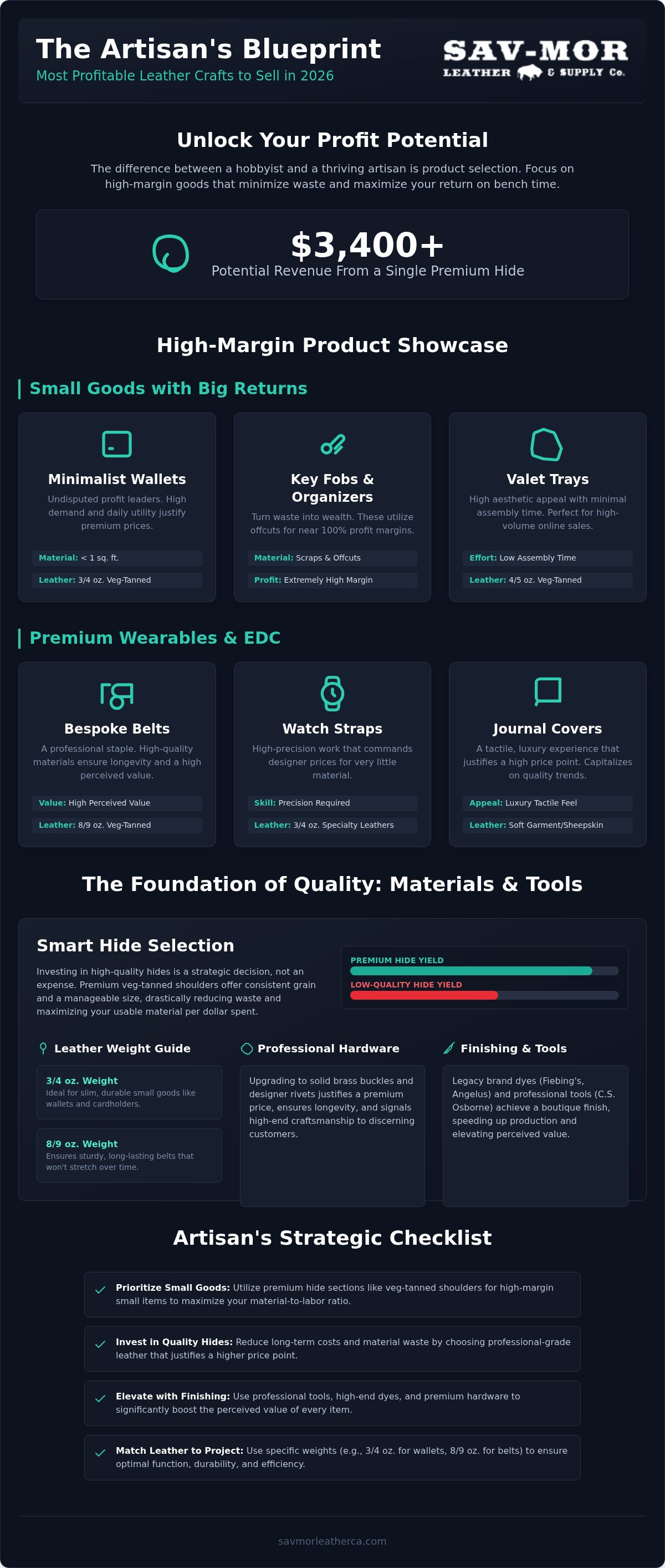
Profitability in a leather workshop is defined by the material-to-labor ratio. To find the most profitable leather crafts to sell, you must analyze how much time you spend at the bench versus the cost of the hide. High-margin items often involve small footprints that allow you to cut around defects or utilize smaller hide sections like shoulders. By maximizing every square inch of your cowhide, you reduce waste and increase your hourly earnings. For 2026, market trends point toward a resurgence in minimalist everyday carry (EDC) and personalized tech accessories that demand professional-grade finishing.
Small Goods with Big Returns
Minimalist wallets and cardholders remain the undisputed profit leaders for artisans. These items require very little material, often less than one square foot, yet they command high prices because of their daily utility. You can easily produce these in small batches using 3/4 oz. veg-tanned leather, which provides the necessary structure without the bulk. Key fobs and cord organizers are equally essential for a healthy bottom line. These utilize the offcuts and scraps that would otherwise be discarded, turning waste into products with near 100% profit margins. Valet trays offer a different advantage. They have high aesthetic appeal and require minimal assembly time, making them perfect for high-volume sales at craft fairs or online shops.
Premium Wearables and EDC
Bespoke belts are a staple for any professional maker looking for the most profitable leather crafts to sell. The key to a premium belt is the material. Using a high-quality vegetable tanned leather in an 8/9 oz. weight ensures longevity and a beautiful patina that customers value. While belts require more material, their perceived value is significantly higher than mass-produced alternatives. Watch straps represent the other end of the spectrum. They require high-precision work and professional tools, but they command designer prices for very little leather. Finally, consider journal covers. By using “soft-as-butter” garment leathers or sheepskin, you create a tactile experience that justifies a luxury price point. These items capitalize on the 2026 trend of investing in quality construction over fast-fashion trends.
Selecting Professional Materials to Elevate Your Craft
Sourcing high-quality hides is a strategic investment rather than a simple expense. Using “cheap” leather often results in higher long-term costs because defects, scars, and inconsistent grain force you to cut around large sections of the hide. This material waste directly reduces your profit margins. When you focus on the most profitable leather crafts to sell, every square inch of material must be usable and professional in appearance. Seasoned artisans prioritize vegetable tanned leather for its ability to take tooling and develop a rich patina. These are key markers of high-end craftsmanship that justify a higher retail price point.
The Professional Advantage of Veg-Tan Shoulders
Selecting the right hide cut is essential for production efficiency. Veg-tanned shoulders are particularly valuable because they offer a consistent grain and a manageable size for small-batch workshops. For small goods like cardholders, a 3/4 oz. weight provides the perfect balance of durability and slimness. If you’re crafting bespoke belts, moving to an 8/9 oz. weight ensures the strap remains sturdy and won’t stretch over years of use. Undyed shoulders offer the most flexibility, allowing you to apply custom dyes and artisan branding that sets your work apart from mass-produced goods. By matching the leather weight to your specific project list, you minimize scrap and maximize your yield.
Hardware and Finishing: The Secret to High Price Points
The difference between a hobbyist project and a retail-ready product often lies in the finishing touches. Upgrading to professional leather hardware, such as solid brass buckles and designer rivets, justifies a premium price tag and ensures the longevity of the piece. Pair this hardware with high-end dyes from legacy brands like Fiebing or Angelus to achieve trending fashion colors that stand out on digital marketplaces. A professional finish does more than just protect the leather; it provides that “exclusive” boutique feel and tactile smoothness that customers expect. Investing in these details transforms basic items into the most profitable leather crafts to sell by elevating the perceived value of your entire collection.
Scaling Production with Professional Tools and Sourcing
Scaling a workshop requires more than just knowing the most profitable leather crafts to sell. It requires a shift in mindset from maker to manufacturer. To maintain high margins as your order volume grows, you must implement a repeatable production workflow. This reduces the labor hours per unit and ensures that every piece leaving your bench meets a strict quality control standard. Professional grade results allow for higher retail pricing, but achieving them efficiently depends on your equipment and your supply chain.
Investing in Professional Leatherworking Tools
Transitioning from entry level kits to professional tools is the fastest way to improve your ROI. Legacy brands like C.S. Osborne provide the precision needed to reduce hand fatigue and ensure stitch consistency across long production runs. High quality equipment saves significant time on repetitive tasks such as cutting, stamping, and carving. When your blades stay sharper longer and your punches strike true every time, you spend less time on corrections and more time on finished inventory. Regular tool maintenance is essential to keep your edges clean and your results professional.
Wholesale Sourcing for the Independent Artisan
The financial impact of wholesale sourcing cannot be overstated for small batch manufacturers. Sav-Mor Leather Supply supports the maker community by offering wholesale prices on all hides, dyes, and hardware to every customer. This accessibility allows you to keep your workshop stocked with premium cowhide and veg-tanned shoulders without the burden of high overhead costs. Since 1970, we have served as a trusted partner for artisans navigating the complexities of nationwide shipping and material consistency. Building a relationship with a multi-generational supplier ensures that the most profitable leather crafts to sell in your shop are always backed by reliable, high-end materials.
Building Your Professional Leatherworking Legacy
Success in the 2026 market requires a strategic balance between artistic skill and business efficiency. By focusing your production on the most profitable leather crafts to sell, you ensure that every hour spent at the bench contributes to a sustainable income. High-margin small goods and premium everyday carry items offer the best path forward, especially when finished with the professional precision that customers now demand. Transitioning to professional-grade tools and wholesale materials isn’t just about saving money; it’s about establishing your brand as a provider of heritage-quality goods.
Sav-Mor Leather Supply has been a family-owned partner to the maker community since 1970. We provide the essential components for your growth, from premium cowhide and veg-tanned shoulders to industry-standard brands like Fiebing, Angelus, and C.S. Osborne. With nationwide shipping on all professional tools and hides, your workshop stays stocked with the quality required to command designer prices. It’s time to elevate your craft and build a business that reflects your dedication to the art of leatherwork.
Shop Premium Leather and Professional Supplies at Wholesale Prices
Frequently Asked Questions
What is the most profitable leather item for beginners to make?
Minimalist wallets and cardholders are the most profitable leather crafts to sell for beginners because they require very little material and can be produced quickly. These small goods utilize tiny sections of a hide, allowing you to turn scraps into high-demand products with significant margins. Because they involve simple construction, you can focus on perfecting your edge finishing and stitching consistency without a massive investment in time.
How do I calculate the profit margin on my leather crafts?
Calculate your profit margin by subtracting the total cost of materials and your labor hours from the final retail price. You must account for every square foot of leather used, the cost of hardware like solid brass buckles, and consumables such as thread and dyes. Professional artisans often set a fixed hourly bench rate to ensure their time is compensated before determining the final markup for business growth.
Why should I use vegetable tanned leather for my products?
Vegetable tanned leather is the preferred choice for premium goods because it is the only material that develops a rich, natural patina over time. It provides the necessary firmness for items like belts and valet trays while remaining receptive to custom tooling and carving. This durability and aesthetic character are key selling points for consumers who value heritage-quality items over mass-produced alternatives.
Is it better to buy leather by the hide or by the shoulder?
Buying by the shoulder is generally more efficient for artisans focused on small goods because it offers the most consistent grain and thickness. Shoulders are flatter and easier to manage than full hides, which helps reduce material waste during the cutting process. If you are producing larger items like garments or upholstery, purchasing a full cowhide or sheepskin is more cost-effective to ensure color consistency across large panels.
What tools are essential for a professional leathercraft business?
A professional workshop requires high-quality cutting blades, stitching chisels, and a reliable maul or mallet. Investing in legacy brands like C.S. Osborne ensures your equipment maintains its precision through years of daily use. As your production scales, adding professional-grade edge bevelers and burnishers will help you achieve a high-end finish in less time, directly increasing your hourly ROI.
Where can I find wholesale leather supplies without a business license?
Sav-Mor Leather Supply offers wholesale pricing to all customers, allowing independent makers to access premium materials without needing a formal business license. This model helps artisans identify and produce the most profitable leather crafts to sell while keeping their overhead costs low. We provide nationwide shipping on everything from 3/4 oz. veg-tanned shoulders to professional dyes from Fiebing and Angelus.

Article by
Sav-Mor Leather Supply