
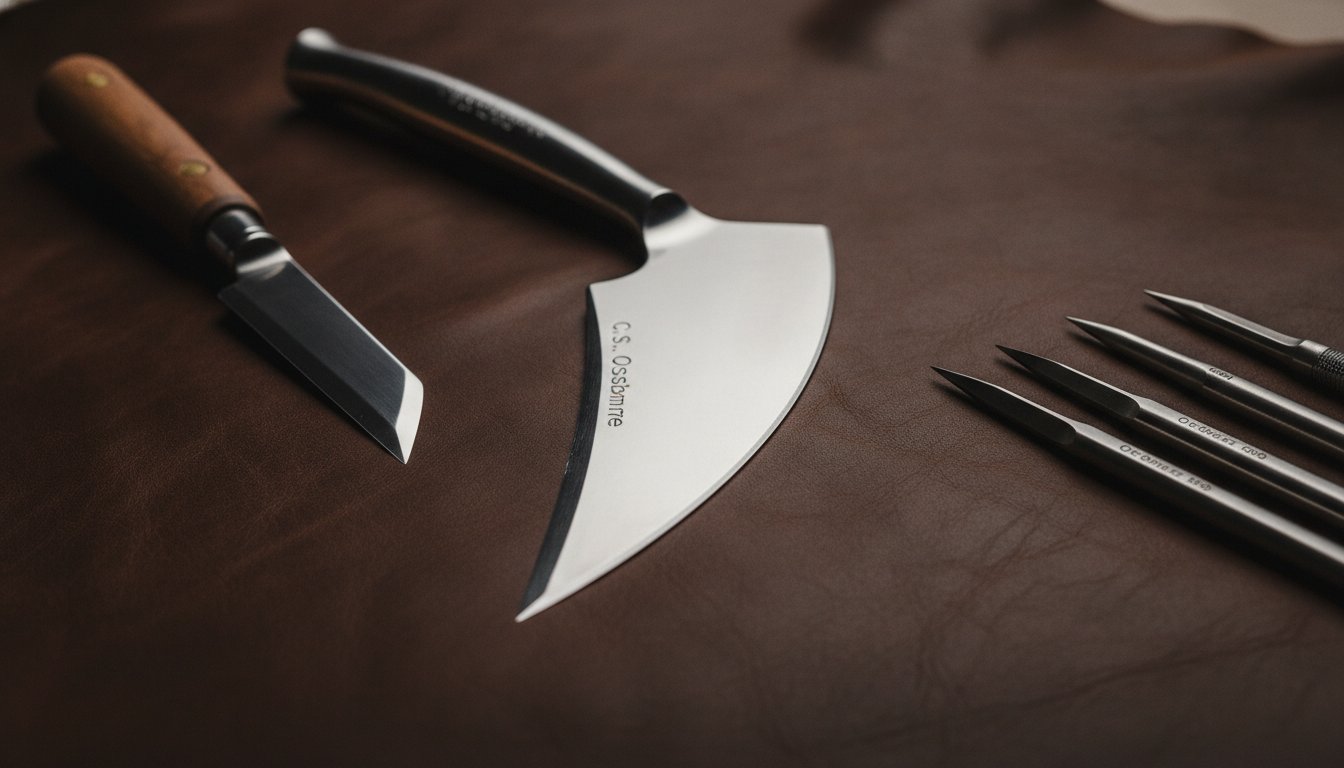
Why does a tool that costs five times more than a starter kit actually save you money before the first stitch is even pulled? For many artisans, the realization comes too late, usually after a dull blade skips across a premium 8/9 oz hide or a flimsy groover produces inconsistent spacing that ruins a week of work. You already know that the quality of your finished piece is limited by the quality of the steel in your hand. Investing in professional leather working tools isn’t just about prestige; it’s about the mechanical advantage and edge retention required for high-end production.
We understand that building a workshop is a significant investment in your craft’s future. This guide clarifies the critical differences between entry-level gear and the heritage tools that stay sharp through miles of stitching. You’ll discover how to curate a kit that delivers cleaner edges and professional-grade results from the very first cut. We’ll explore the specific brands like C.S. Osborne and the metallurgy that define a master’s bench, ensuring your ROI is measured in decades of reliable service.
Key Takeaways
- Learn why high-carbon steel and superior edge retention are the hallmarks of quality that allow for repeatable precision in high-end production.
- Discover the essential cutting and skiving instruments, including head knives and Japanese-style skivers, needed to manage hide thickness effectively.
- Understand how to select Professional Leather Working Tools by matching beveler sizes and needle types to specific weights like 3/4 oz or 8/9 oz hides.
- Explore the “Buy Once, Cry Once” approach to investing in legacy brands like C.S. Osborne that outlast and outperform inexpensive starter alternatives.
- Master the transition from basic multi-hole punches to professional pricking irons and awls for cleaner, more consistent stitching patterns.
The Anatomy of Professional Leather Working Tools: Why Quality Matters
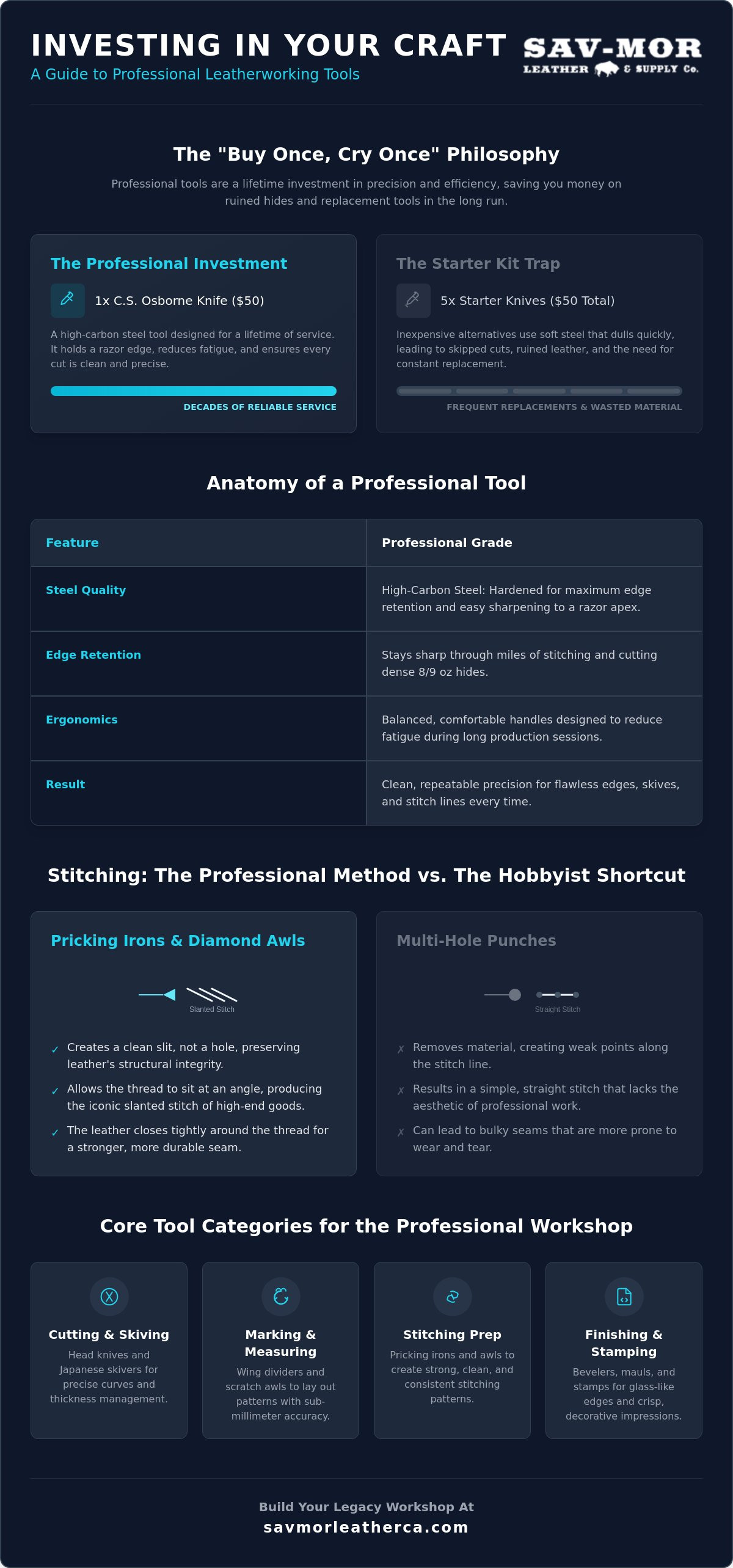
Professional Leather Working Tools are the backbone of any serious workshop. They are not merely accessories; they are high-carbon steel instruments engineered for repeatable precision and superior edge retention. While a starter kit might suffice for a small weekend project, a full-time artisan requires tools that withstand the pressure of heavy 8/9 oz cowhide without yielding. This is the foundation of the “Buy Once, Cry Once” philosophy. A $50 C.S. Osborne knife represents a lifetime investment. In contrast, five $10 alternatives will likely end up in the scrap bin after ruining expensive hides with jagged, dull cuts.
The difference often lies in the metallurgy. Professional-grade tools utilize heat-treated steel that maintains a “razor-edge” even during demanding production runs. Beyond the blade, ergonomics play a vital role. Professional handles are designed to fit the palm naturally, which reduces hand fatigue for artisans who spend eight hours a day at the bench. When your tools work with you rather than against you, the quality of your craft improves instantly.
Edge Retention and Steel Quality
The primary divider between hobbyist and professional gear is the type of steel used. Hobbyist tools often favor stainless steel because it’s rust-resistant and inexpensive. However, stainless is notoriously difficult to sharpen to a true apex and loses its bite quickly when meeting dense fibers. High-carbon steel is the industry standard for those serious about their craft. Professional leather tools are defined by their ability to hold an apex through miles of tough cowhide fibers. Mastering various leather crafting techniques requires realizing that a tool’s edge must be as resilient as the material it cuts.
Heritage Brands: The C.S. Osborne and Craftool Legacy
Names like C.S. Osborne and Craftool aren’t just labels; they represent centuries of combined industry expertise. C.S. Osborne has been a staple in American workshops since 1826, proving that their designs for awls, punches, and splitters are nearly impossible to improve upon. These brands focus on the specific needs of the maker, ensuring that every bevel and blade angle is optimized for professional results. Shop our professional tool collection to find the vetted instruments that have supported generations of leather artisans.
Core Tool Categories for the Professional Workshop
Building a high-end workshop requires moving beyond generic kits and selecting Professional Leather Working Tools that address specific manufacturing challenges. Every step of the process, from the initial hide layout to the final burnish, demands a specialized instrument designed for the task. Efficiency in a professional setting isn’t just about speed; it’s about the repeatability of the result across dozens of production pieces.
Essential Cutting Tools
Thickness management is the hallmark of a master. While a rotary cutter excels at long, straight strips, a traditional clicking knife or a head knife provides the maneuverability needed for intricate curves. For skiving, Japanese-style skivers allow you to taper edges with surgical precision, ensuring that pockets and seams don’t become bulky. As you refine your cutting process, you’ll also need to explore leather hardware that complements your precisely cut components.
Transitioning to professional stitching involves a shift in mindset. Hobbyists often rely on multi-hole punches that remove material, but professionals prefer pricking irons and diamond awls. These tools create a slit that closes around the thread, which results in the iconic slanted stitch seen on premium goods. This method preserves the structural integrity of the cowhide while offering a cleaner aesthetic that defines high-end craftsmanship.
Marking and Measuring Precision
Accuracy is what separates a custom piece from a mass-produced one. Wing dividers and scratch awls act as the architects of your project, allowing you to scribe stitch lines and layout patterns with 1/128″ precision. This level of detail ensures that every hole aligns perfectly when two pieces of leather meet. To finish the piece, precision bevelers remove a consistent sliver of grain, setting the stage for a glass-like edge after burnishing. For those adding decorative elements, weighted mauls paired with stainless steel stamps provide the deep, crisp impressions that define professional carving.
Building Your Kit: Matching Professional Tools to Leather Weights
A master’s workshop is organized by the relationship between the tool and the hide. Professional Leather Working Tools are not “one size fits all” instruments. They are meticulously sized to match the specific weight and density of the leather you are working. Using a beveler designed for heavy saddle leather on a delicate garment hide will result in a ruined edge; using an undersized tool on thick skirting will leave the project looking unfinished and amateur.
Tools for Lightweight vs. Heavyweight Hides
Match your tool selection to the thickness of your material to ensure precision. For “soft-as-butter” garment leathers or thin 3/4 oz linings, select #0 or #1 bevelers and fine harness needles. These tools respect the fragility of the grain without tearing the fibers. Conversely, rigid 8/9 oz veg-tan shoulders require #4 bevelers and heavy-duty needles paired with thicker lacing to manage the increased tension of the material. Browse our premium leather hides to find the exact weights that suit your next professional project.
Stamping and carving performance also depends on material preparation. When working with veg-tan, moisture content is critical. A professional-grade stainless steel stamp requires the leather to be “cased” properly. If the hide is too dry, the impression will be shallow and faded; if it is too wet, the fibers will mush rather than compress. High-end tools provide the weight and balance necessary to achieve deep, crisp impressions that hold their detail for decades.
The Finishing Touch: Dyes and Adhesives
The synergy between your tools and your finishes determines the final aesthetic. Professional tools leave a sheared, clean surface that allows for superior dye absorption. When you use a sharp head knife or a precision skiver, you aren’t crushing the leather’s cellular structure. This allows premium dyes from brands like Fiebing’s or Angelus to penetrate deeply and evenly. Finish your project by maintaining your steel. Regular stropping with a jeweler’s rouge keeps your Professional Leather Working Tools at a peak apex, ensuring every cut is as effortless as the first. Store your tools in a dry, organized rack to prevent moisture buildup and edge damage between sessions.
Elevate Your Workshop with Heritage-Grade Precision
Transitioning from basic kits to Professional Leather Working Tools is the most significant step an artisan can take toward achieving a master-level finish. By prioritizing high-carbon steel and matching your bevelers and needles to specific hide weights, you eliminate the frustration of ruined materials and inconsistent stitching. Quality tools don’t just work better; they respect the integrity of the premium cowhide or exotic skins on your bench.
Sav-Mor Leather Supply has been a family-owned industry partner since 1970, providing the maker community with the same high-end supplies used by top design houses. We offer wholesale prices to both the public and professional artisans, ensuring that elite craftsmanship remains accessible. With nationwide shipping on our curated collections of C.S. Osborne and Craftool instruments, your next workshop upgrade is only a click away. Shop Professional Leather Working Tools at Wholesale Prices and experience the difference that five decades of expertise brings to your craft. We’re proud to support your journey from the first cut to the final burnish.
Professional Leather Working Tools: Frequently Asked Questions
What are the first 5 professional leather tools a beginner should buy?
Invest in a high-carbon steel head knife, a set of professional pricking irons, a diamond awl, a #2 edge beveler, and a weighted poly maul. These core instruments allow you to cut, stitch, and finish projects ranging from 3/4 oz linings to 8/9 oz hides. Starting with these essentials prevents the material waste often caused by dull, hobby-grade alternatives that tear through expensive grain.
How do I sharpen my professional leather skiving knife?
Sharpen your skiving knife using a progression of whetstones from 1000 to 8000 grit before finishing on a leather strop with polishing compound. Maintain a consistent angle of 10 to 15 degrees to ensure a razor-sharp apex. A properly sharpened blade should glide through dense veg-tan leather without requiring excessive downward pressure or dragging the fibers, which preserves the integrity of your skived edges.
Is C.S. Osborne better than modern boutique leather tool brands?
C.S. Osborne provides unmatched industrial reliability and a heritage of excellence that boutique brands often struggle to replicate at scale. Many artisans choose these Professional Leather Working Tools because they are forged for longevity and can be maintained for decades of daily use. While boutique tools offer unique ergonomics, the time-tested metallurgy of established brands remains the gold standard for high-volume production and consistent results.
Can I use professional leather tools on chrome-tanned garment leather?
Yes, but your blades must be at their absolute sharpest to prevent “soft-as-butter” garment fibers from stretching or bunching. Chrome-tanned hides are more elastic than rigid veg-tan, so tools like rotary cutters and thin Japanese skivers often perform better than heavy head knives. Using a polished, sharp edge prevents the tool from dragging, which protects the delicate finish of premium sheepskin or goatskin during the assembly process.
Why does my leather punch keep getting stuck in the hide?
A stuck punch usually indicates a dull cutting edge or high friction within the tube. Apply a small amount of beeswax to the tip of the tool before each use to lubricate the entry and exit through the hide. If you are working with oily latigo or heavy 8/9 oz cowhide, ensure you are using a professional-grade punch with a polished interior to allow the waste plugs to clear efficiently.
How often should I strop my leatherworking blades?
Strop your blades every 15 to 20 minutes of active cutting to maintain a polished apex and prevent dulling. Regular stropping with a fine jeweler’s rouge keeps your Professional Leather Working Tools gliding through dense fibers without the need for frequent regrinding on stones. If you feel even a slight increase in resistance while cutting through thick leather, return to the strop immediately to restore the edge.

Article by
Sav-Mor Leather Supply