

You don’t need a massive bank account to produce high-end leather goods; you just need a strategy to avoid the retail markup trap. It’s common to feel overwhelmed by the variety of hides and the daunting price tags on specialty tool sets. Many beginners hesitate because they fear sinking money into the wrong equipment or overpaying for small scraps of leather. You’re likely asking: is leatherworking an expensive hobby? When you look at premium hides and professional-grade tools, the initial costs can seem prohibitive.
This guide reveals how to bypass unnecessary expenses by sourcing like a professional artisan from the start. Discover the essential starter kit, learn to understand leather weights from 3/4 oz. to 8/9 oz., and find out how to access wholesale pricing to keep your workshop sustainable and your projects professional.
Key Takeaways
- Identify the essential C.S. Osborne tools needed for a professional setup while avoiding the hidden costs of low-quality, multi-piece starter kits.
- Explore how sourcing full hides at wholesale prices helps you decide if leatherworking is an expensive hobby for your specific budget and creative goals.
- Learn to navigate technical specifications like leather weights, from 3/4 oz. garment leathers to 8/9 oz. veg-tan, to prevent material waste.
- Discover how using industry-standard finishes from Fiebing’s and premium hardware can significantly increase the durability and professional resale value of your work.
The Initial Investment: Breaking Down Startup Costs
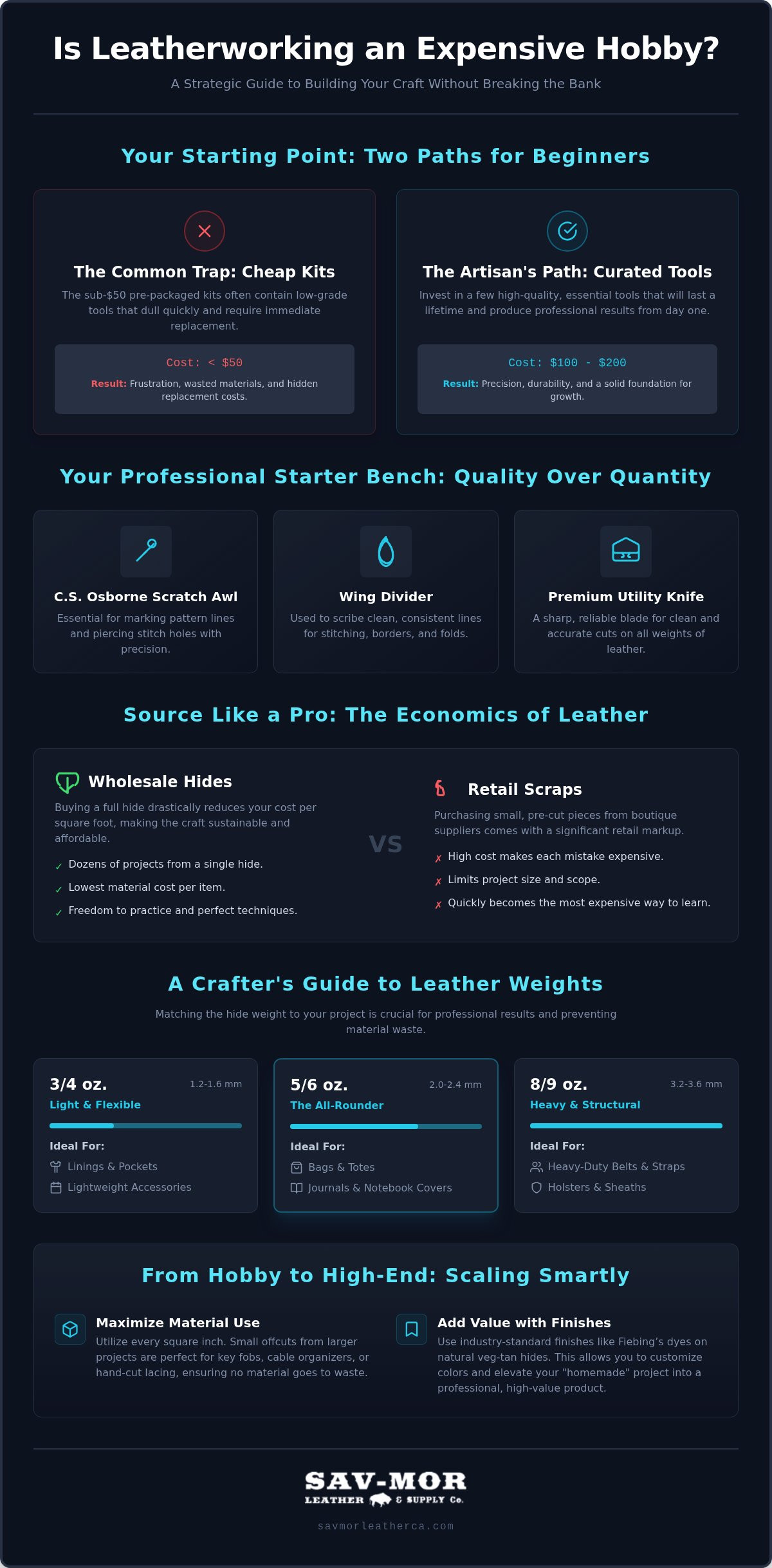
Many newcomers ask: is leatherworking an expensive hobby? The answer depends on your entry strategy. You can find pre-packaged kits for under $50, but these often contain low-grade tools that require immediate replacement. A Master Curator approach involves selecting only the specific professional tools needed for your first project. When people ask is leatherworking an expensive hobby, they are often looking at the price of high-end machinery rather than the affordability of hand tools. This method ensures every dollar spent goes toward equipment that lasts a lifetime.
Hand-stitching serves as the most affordable and technically superior entry point. While industrial sewing machines cost thousands, a traditional saddle stitch requires only two needles and a quality awl. This technique produces a more durable seam than any machine. It allows you to create high-end wallets or belts without a massive upfront investment. You’ll develop a better feel for the material through manual work while keeping your startup costs manageable.
Essential Starter Tools: Quality Over Quantity
Focus your budget on the items that directly touch the leather. Explore professional-grade leatherworking tools from trusted brands like C.S. Osborne to ensure clean cuts and precise holes. Investing in a single, high-quality diamond awl or a sharp utility knife is better than owning ten mediocre tools that tear your hide. For those interested in decorative work, Craftool stamping sets offer a reliable way to add texture without overspending. Your basic professional starter bench should include:
- C.S. Osborne Scratch Awl: Essential for marking and piercing.
- Wing Divider: Used to scribe consistent stitch lines.
- Premium Utility Knife: For clean, accurate edges on everything from 3/4 oz. garment leather to 8/9 oz. veg-tan.
A curated set of these professional essentials typically ranges from $100 to $200. This provides a solid foundation for any serious maker without the waste of unnecessary gadgets.
Understanding Material Costs: Why Hides are a Long-Term Investment
Many beginners assume leather is a high recurring cost because they purchase pre-cut blanks at retail prices. This perspective often drives the question: is leatherworking an expensive hobby? In reality, calculating the square foot cost of a full cowhide or a vegetable tanned shoulder reveals significant savings. A single hide can produce dozens of wallets, reducing the material cost per item to a fraction of retail prices. This long-term investment approach makes the craft sustainable for any budget.
Distinguishing between leather types prevents costly mistakes. Our premium “soft-as-butter” garment leathers offer the necessary drape for apparel, while durable upholstery hides provide the resilience needed for furniture. Matching the hide weight to your project ensures professional results and prevents material waste. Consider these standard weights for your next build:
- 3/4 oz. Leather: Ideal for linings, pockets, and lightweight accessories.
- 5/6 oz. Leather: The standard for bags, journals, and medium-duty goods.
- 8/9 oz. Leather: Necessary for heavy-duty belts, holsters, and structural pieces.
Wholesale Sourcing: The Secret to Managing Expenses
Sourcing from a multi-generational family business like Sav-Mor Leather Supply provides access to wholesale pricing usually reserved for industry professionals. Since 1970, we’ve bridged the gap between raw materials and the maker community. By avoiding the boutique markup on small scraps, you can afford to practice and perfect your technique. Once you’ve mastered your cuts, find professional hardware to elevate your work to a retail-ready standard. This strategic sourcing is the key to answering if leatherworking is an expensive hobby with a definitive “no.”
Scaling the Craft: Avoiding the ‘Expensive Hobby’ Trap
Scaling your production doesn’t require a massive budget increase if you manage your materials efficiently. Beginners often ask if leatherworking is an expensive hobby because they focus only on the initial cost of the hide. You can significantly lower your per-project expense by utilizing every square inch of your material. Small offcuts from a 5/6 oz. cowhide are perfect for key fobs, while thinner 3/4 oz. scraps create excellent internal linings or hand-cut lacing. This level of efficiency transforms the craft from a luxury pursuit into a sustainable hobby.
Professional finishes act as the bridge between a “homemade” look and a high-end artisan product. Using industry-standard dyes from Fiebing’s or Angelus allows you to buy natural veg-tanned hides and customize them to your specific needs. This versatility saves money by reducing the number of pre-dyed hides you need to stock. You can achieve trending fashion colors or classic designer tones with a single bottle of professional dye. Find essential leather craft hardware for your next project to ensure your finished pieces possess the structural integrity required for long-term use.
Professional Hardware and Finishing: The Final Touch
Investing in premium hardware prevents the frustration of a project failing at the finish line. Cheap rivets and snaps often fail under stress, which can ruin hours of work on a premium hide. High-quality buckles and solid brass hardware add immediate resale value and professional weight to your goods. This attention to detail clarifies why people wonder is leatherworking an expensive hobby; it’s an investment in components that last decades. Using professional-grade adhesives like Barge cement ensures a permanent bond that budget alternatives can’t match. Shop our curated collection of professional leather hardware to find components that match the heritage quality of your leather.
Build Your Professional Workshop Today
Mastering this craft requires a strategic approach to your bench and your materials. By selecting curated, professional-grade tools and sourcing full hides at wholesale rates, you eliminate the retail markups that discourage most beginners. Deciding if leatherworking is an expensive hobby doesn’t have to be a deterrent. When you invest in durable veg-tanned shoulders and utilize every square inch of your material, the cost-per-project becomes surprisingly sustainable.
Finish your work with the same standard of excellence used by professional makers since 1970. Our collection offers the durability and aesthetic appeal your projects deserve. Upgrade your projects with professional-grade leather hardware to ensure every buckle and rivet matches the longevity of your premium cowhide. Your path to becoming a master artisan starts with the right foundation.
Frequently Asked Questions
Is leatherworking more expensive than woodworking or sewing?
Leatherworking is generally more accessible than woodworking because it doesn’t require expensive heavy machinery. While a woodworker needs table saws and planers, a leather artisan can produce professional results using only hand tools. The initial cost of hides is comparable to high-quality hardwoods, but the lower equipment overhead makes it a more cost-effective entry point for many makers.
What is the minimum budget needed to start leatherworking professionally?
A professional-grade starter bench typically requires an investment between $100 and $200 for essential tools. This budget covers premium items like a C.S. Osborne scratch awl and a high-quality utility knife. People asking is leatherworking an expensive hobby find that starting with curated, lifetime tools prevents the recurring cost of replacing cheap multi-piece kits that break or dull quickly.
Can I make money back from this hobby by selling my goods?
You can certainly recoup your costs by selling small goods like wallets, belts, and key fobs. Since a single wholesale cowhide produces dozens of items, the material cost per piece is remarkably low. Selling even a few high-quality, hand-stitched products often covers the price of your tools and premium hides. This makes the craft a self-sustaining venture for dedicated artisans.
Why is vegetable tanned leather more expensive than chrome tanned leather?
Vegetable tanning is a traditional process that takes weeks or months to complete using natural tannins from bark and plants. Chrome tanning is a chemical-based method that takes only a few days. The heritage craftsmanship and extended production time make veg-tan leather more durable and expensive. It’s the preferred choice for those wondering is leatherworking an expensive hobby due to its longevity.

Article by
Sav-Mor Leather Supply