
Understanding Cowhide Leather: The Foundation of Professional Craftsmanship
In the professional maker community, cowhide leather is revered as the most versatile and durable raw material available. Its unique biological structure, characterized by a dense and interlocking fiber network, provides superior tensile strength that is unmatched by other common leathers. This inherent toughness makes cowhide the gold standard for projects ranging from rugged, heavy-duty gear to exquisitely soft-as-butter garments. For artisans sourcing materials, it’s essential to understand the distinction between “hides,” which refer to the full skin of the animal, and “sides,” which are half a hide sold for more manageable projects and consistent quality.
Why Cowhide Dominates the Artisan Market
Cowhide’s prevalence in professional workshops is no accident. Its primary advantage lies in scale; the large surface area of a single hide allows for seamless, large-scale projects like upholstery or long straps without disruptive seams. Compared to smaller skins like sheepskin or goatskin, cowhide offers a broader canvas. Furthermore, its surface is uniquely receptive to a vast array of finishes, dyes, and treatments, absorbing them consistently and allowing for predictable, repeatable results—a critical factor for any professional artisan.
Anatomy of a Hide: From Top to Bottom
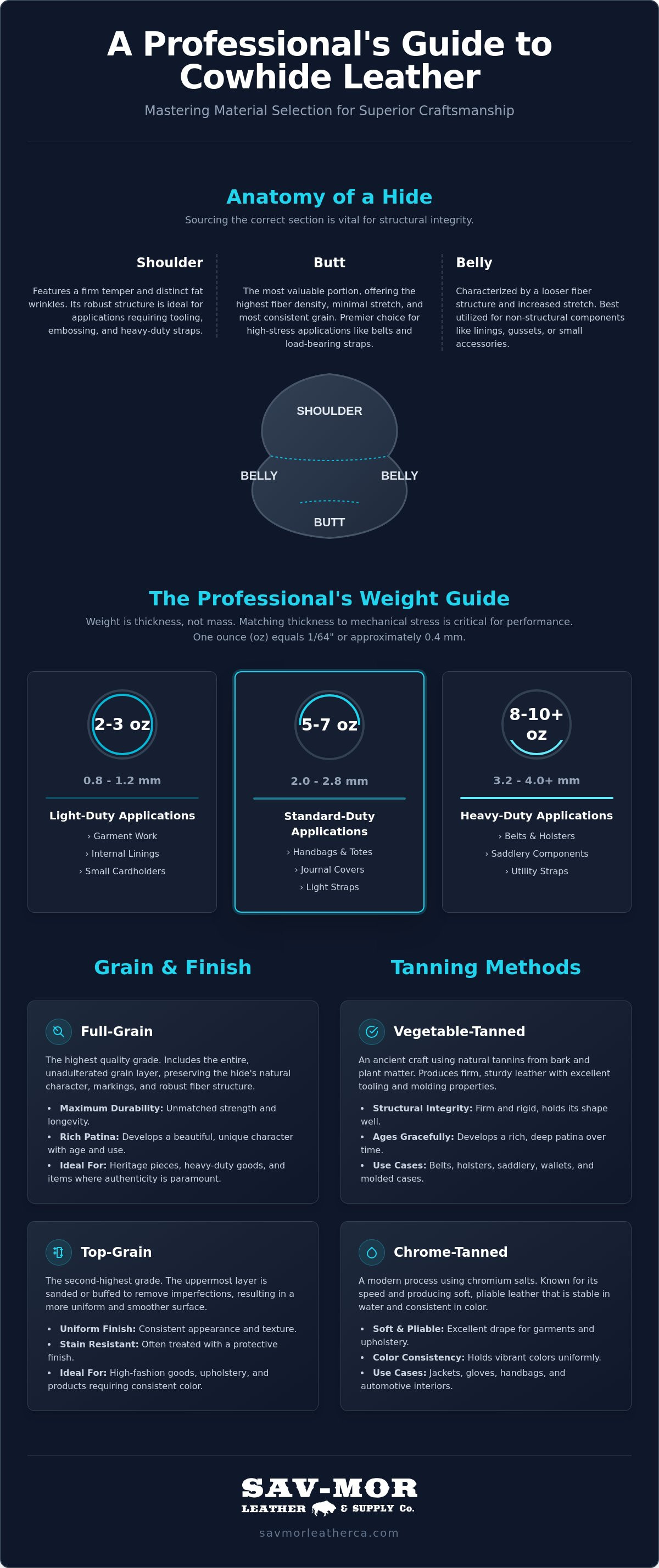
Not all parts of a cowhide are created equal. Professionals select specific sections based on the project’s demands:
- The Shoulder: Known for its strength and minor growth marks, this area is excellent for bags and accessories that require structure but also a touch of natural character.
- The Belly: This section is softer and has a looser fiber structure, making it prone to stretching. It’s often used for goods where pliability is more important than rigidity, such as gussets or linings.
- The Butt/Bend: Sourced from the animal’s backside, this is the premium section. It provides the firmest, most consistent, and cleanest grain, making it the top choice for high-end belts, straps, and holsters. For high-stress applications, the exceptional tightness of the grain in the butt section ensures maximum durability and minimal stretch over time.
Choosing the Right Cowhide Grain and Weight for Your Project
Selecting the correct cowhide begins with understanding its technical specifications. The “weight” of leather is actually a measure of its thickness, expressed in ounces. One ounce is equivalent to 1/64th of an inch. This system directly impacts the drape, feel, and structural integrity of your finished piece. For example, an 8/9 oz cowhide leather is approximately 3.2mm to 3.6mm thick, ideal for sturdy belts. Distinguishing between grain types is equally critical:
- Full-Grain: The highest quality grade, full-grain leather includes the complete, unaltered outer layer of the hide. It showcases natural markings and develops a rich, beautiful patina over time.
- Top-Grain: The second-highest grade, top-grain has had the very top layer sanded or buffed to remove imperfections. This creates a more uniform, refined surface often preferred for high-fashion goods.
- Genuine/Suede: These are derived from the lower layers of the hide, known as the split. While less durable, they offer a soft, napped texture ideal for linings or lightweight apparel.
Explore our curated selection to find the perfect material for your vision. Explore our curated selection of leather hides.
The Weight Guide: Ounces to Applications
- 2-3 oz (0.8-1.2mm): Ideal for wallet interiors, linings, and lightweight, soft-as-butter garment work where flexibility is paramount.
- 5-7 oz (2.0-2.8mm): This is the versatile sweet spot for handbags, journal covers, light-duty straps, and accessories that need to balance structure with pliability.
- 8-10+ oz (3.2-4.0mm+): The heavy-duty choice for projects demanding maximum strength and rigidity, such as tool belts, professional holsters, and traditional saddlery.
Full-Grain vs. Top-Grain: A Professional Comparison
While many claim full-grain is always superior, a true professional knows each has its strategic place. Artisans prefer full-grain for heritage projects where the unique character and aging potential (patina) are celebrated features. However, top-grain is the tactical choice for “designer” finishes that require flawless, uniform color. When a project demands high-fashion “trending colors,” a corrected top-grain hide provides the perfect, consistent canvas that full-grain cannot.
Chrome Tan vs. Vegetable Tanned Cowhide: Performance and Patina
The tanning process fundamentally alters the performance, feel, and aesthetic of cowhide leather. The two dominant methods are chrome tanning and vegetable tanning.
- Chrome Tanned (Chrome Tan): This modern method uses chromium salts to tan a hide in as little as a day. It produces a soft, supple leather that is water-resistant and holds color exceptionally well. It offers “instant gratification” in its consistency and flexibility.
- Vegetable Tanned (Veg-Tan): A traditional, eco-friendly process using natural tannins from tree bark, veg-tan leather is firm, durable, and possesses a classic leather scent. It represents a “legacy” material that ages beautifully.
A key difference is the ability to “burnish.” This technique of polishing the edges to a smooth, glossy finish only works on the firm fibers of vegetable-tanned leather. For projects needing the best of both worlds, Latigo leather is a hybrid, first chrome-tanned and then veg-tanned, offering both flexibility and rugged durability.
The Case for Vegetable Tanned (Veg-Tan) Leather
Veg-tan is the essential choice for traditional leathercraft due to its unique tooling capabilities. Its firm surface readily accepts and holds impressions from stamps, carvings, and molding, allowing for intricate artistic expression. Over time, it absorbs oils and sunlight, developing a rich, dark patina that tells the story of its use. If your project involves custom designs or requires a rigid structure, veg-tan is the only professional choice.
Chrome Tan: Fashion, Flexibility, and Color
For garments, upholstery, and modern fashion accessories, chrome tan is king. It is renowned for its soft-as-butter hand feel and immediate comfort. The tanning process makes it more resistant to water, stains, and heat, while its fibers are able to lock in vibrant dyes permanently. This colorfast and supple nature is why the vast majority of commercial leather goods, from handbags to jackets, utilize chrome-tanned cowhide.
Matching Cowhide with Professional Tools and Hardware
A premium cowhide hide deserves to be worked with professional-grade tools and hardware. The synergy between your material, your tools, and your findings is what elevates a project from amateur to professional. The thickness of your cowhide dictates every choice, from the blade you use to cut it to the length of the rivets used to assemble it.
Essential Tools of the Trade: Cutting and Stitching Cowhide
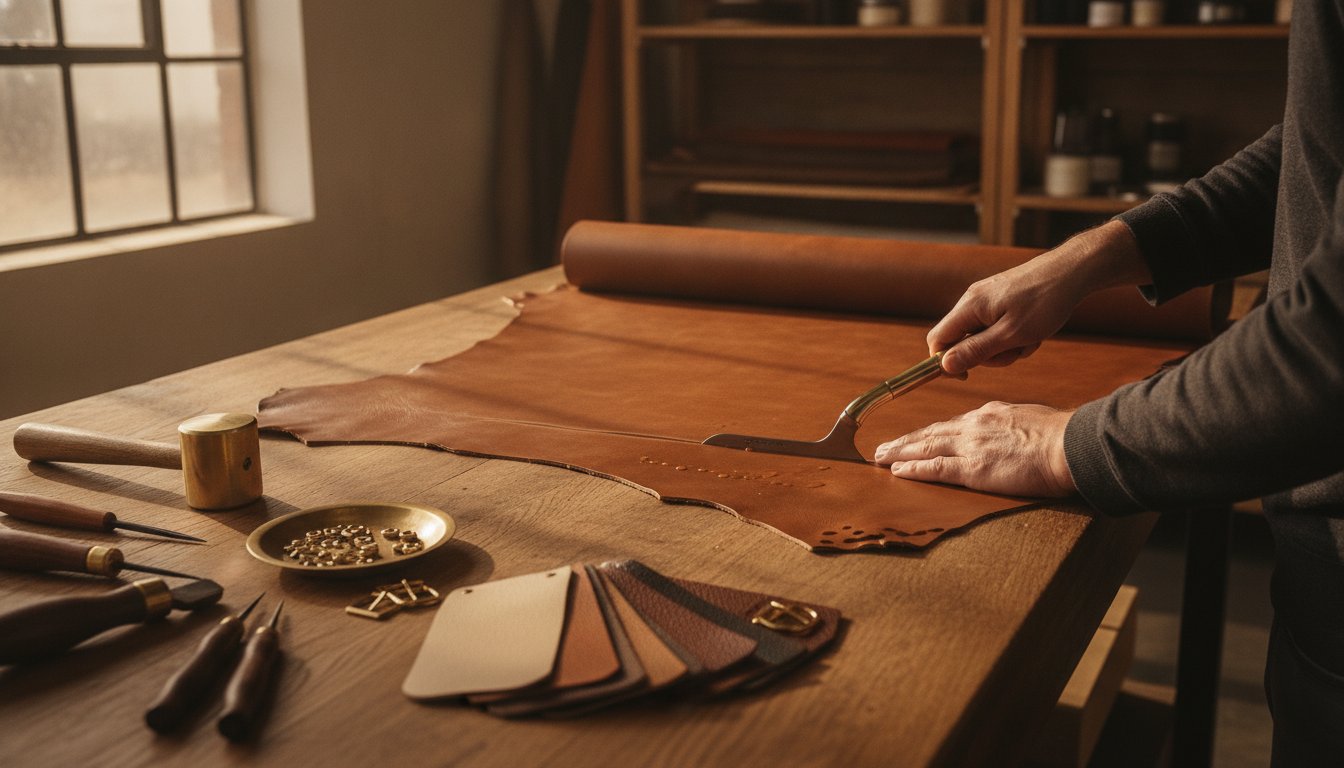
Working with cowhide, especially heavier weights, demands sharp, purpose-built tools. A dull blade won’t just make your work harder; it will compress and tear the leather fibers, leading to messy edges and poor stitching channels.
- Cutting Tools: For straight cuts on 8 oz+ veg-tan, a heavy-duty utility knife with a fresh blade is a must. For curves and precision shaping, professionals rely on a high-carbon steel head knife or round knife. These tools allow you to make clean, beveled cuts with a rolling motion that standard blades cannot replicate.
- Stitching Awls and Chisels: To create stitch holes, you need more than just a needle. A scratch awl is used to mark your stitch line. For the holes themselves, a stitching chisel (or pricking iron) is struck with a mallet to create perfectly spaced, angled slots for a professional saddle stitch. For thicker leather or tight corners, a stitching awl with a diamond-shaped blade is used to pierce the leather one hole at a time, ensuring precision and control.
- Finishing Tools: After stitching, an edge beveler is used to round off sharp corners, followed by burnishing tools for veg-tan. To bring your project to life, industry-standard finishes like Fiebing’s dyes provide rich, lasting color that penetrates deep into the cowhide.
Find the essential equipment for your workshop in our curated collection. Shop professional-grade leatherworking tools.
Selecting Hardware for Durability and Style
The right hardware not only secures your project but also complements its aesthetic. A rule of thumb is to match the scale of the hardware to the thickness of the hide; a delicate buckle will look out of place and fail on a heavy 10 oz belt. For 9 oz+ bridle leather, select heavy-duty buckles and D-rings made of solid brass or stainless steel. Solid brass is the preferred partner for heritage veg-tan projects, as it develops its own patina that ages in harmony with the leather. When setting rivets or snaps, ensure the post length is correct for your leather’s weight to guarantee a secure, lasting connection. Find professional-grade hardware for your next project.
Sourcing Premium Cowhide Hides: Why Quality Consistency Matters
For any serious maker, consistency is key. A multi-generational family business provides a level of quality control and expertise that bulk marketplaces simply cannot match. When you source from a trusted supplier, you receive hides that have been vetted for quality, ensuring your projects are built on the best possible foundation. This commitment extends to professional packaging and nationwide shipping, which prevents creasing and damage, so your hide arrives ready for the workbench.
The Sav-Mor Heritage: Since 1970
With over 50 years of experience, Sav-Mor Leather Supply has become a heritage signature of trust within the maker community. Our value is rooted in the expertise of a “Master Curator” who personally vets every hide for quality before it ever reaches a customer. We are committed to being a one-stop-shop for the entire leatherworking ecosystem, providing not just the hides, but the tools, dyes, and hardware you need to see a project through from start to finish.
Buying Wholesale: Quality Without the Premium Price Tag
We believe that every maker, from the weekend hobbyist to the full-time professional, deserves access to the best materials at fair prices. That is why our wholesale pricing applies to all customers, regardless of order size. We encourage artisans to purchase full sides for the best value and to ensure color and grain continuity across a product line. By providing the full range of professional dyes, tools, and finishes, we empower you to complete your entire artisan experience under one roof.

Article by
Sav-Mor Leather Supply