
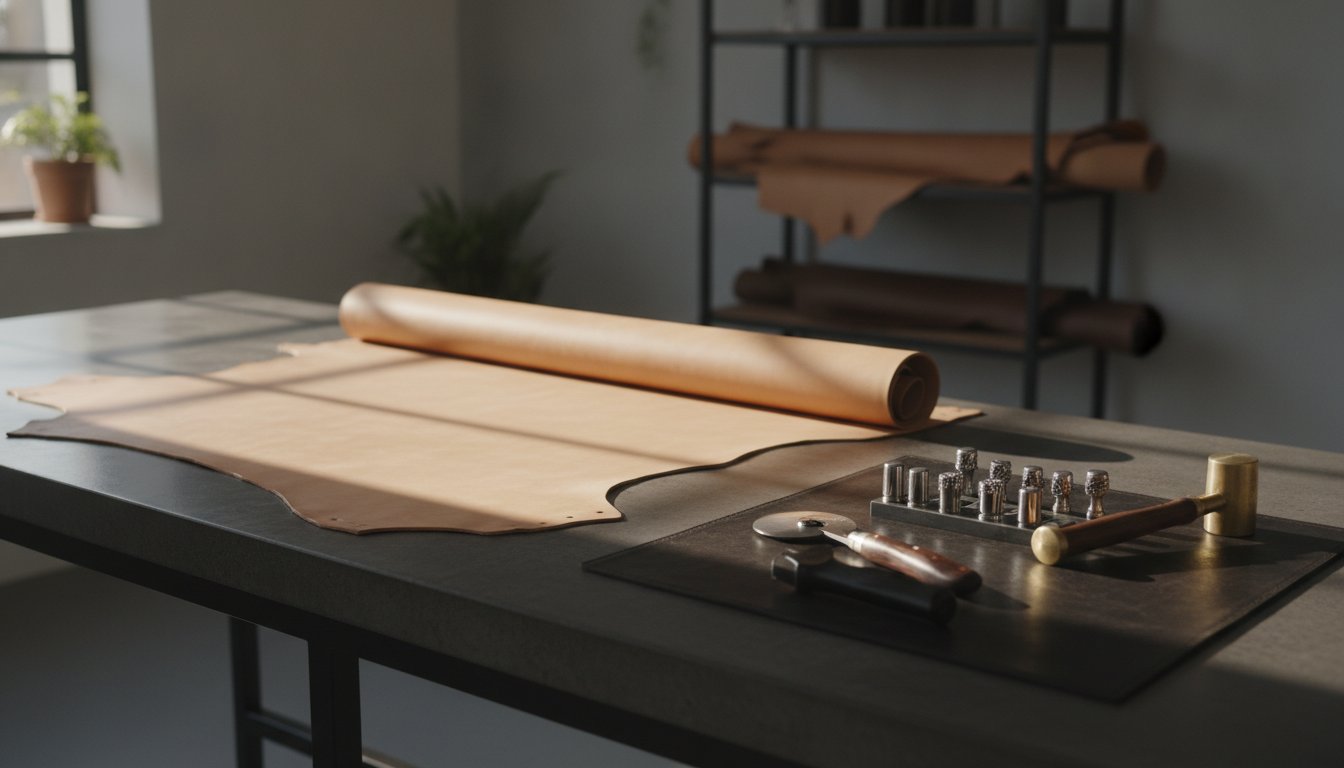
Your craft is only as good as your raw materials. Many artisans lose hours to hides that fight back against every cut and stitch. You’ve likely felt the frustration of finding veg tan leather for sale only to discover inconsistent thickness or a surface that refuses to take a crisp, deep stamp. It’s an expensive gamble that often results in wasted material and compromised margins. We understand that for a professional maker, a hide isn’t just a purchase; it’s the foundation of your reputation.
This guide ensures you never settle for subpar stock again. You’ll discover how to select and source professional-grade hides that respond perfectly to your techniques, from the initial layout with a scratching awl to the final punch of a stitching chisel. We’ll show you how to identify the technical markers of elite tanning and how to lower your overhead through direct wholesale access. By the end of this article, you’ll know exactly how to secure consistent, high-quality material for every project in your 2026 queue. We’ll dive into the specifics of leather weights, tool manipulation for fids and chisels, and the curation process that separates hobbyist results from master-level artistry.
Key Takeaways
- Identify the unique properties of vegetable tanned hides, focusing on how natural tannins provide the firm temper necessary for professional molding and shaping.
- Master technical weight conversions to select the perfect hide when evaluating veg tan leather for sale for your specific project requirements.
- Learn the precise mechanics of casing leather to achieve deep, crisp results with your carving chisels and stitching awls.
- Discover how to leverage wholesale supplier relationships to secure consistent, high-grade materials while maintaining a profitable workshop.
- Understand the importance of pairing premium hides with professional-grade hardware to ensure your finished work meets elite artisan standards.
Understanding Vegetable Tanned Leather: Why Artisans Choose It
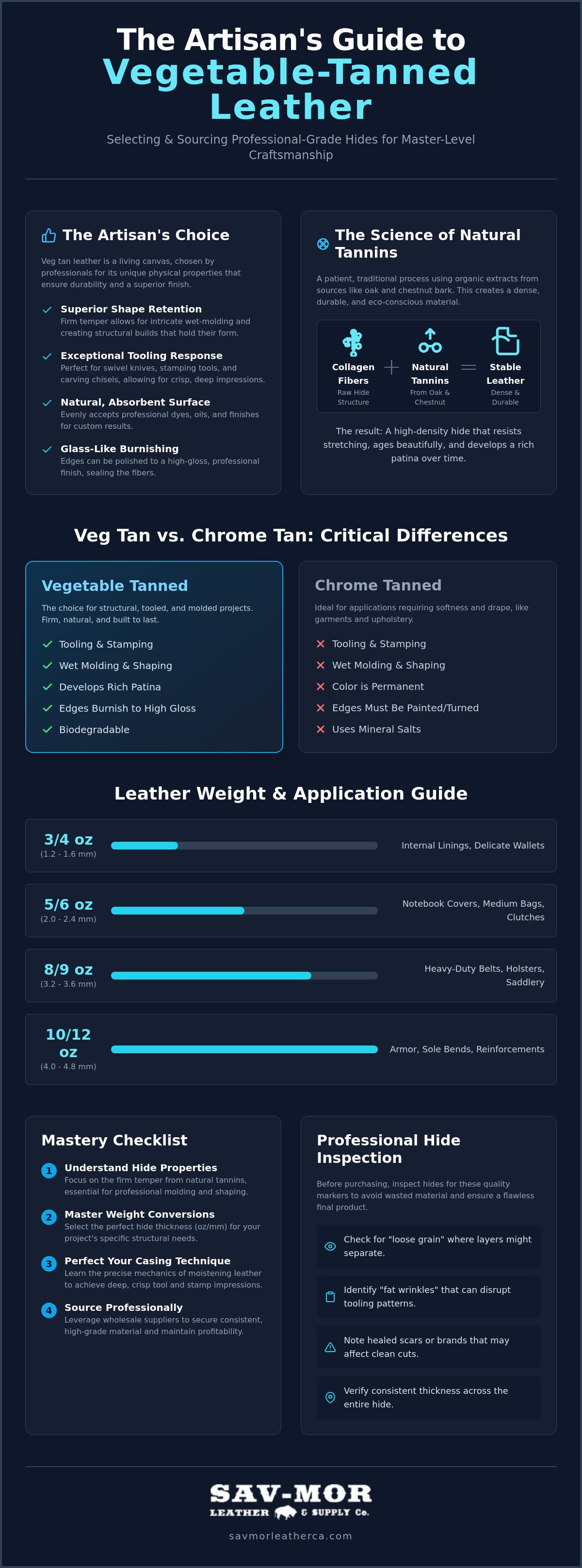
Vegetable tanning represents the pinnacle of traditional leatherwork. This process utilizes natural tannins extracted from organic sources like oak, mimosa, and chestnut bark to stabilize the hide. Unlike modern chemical shortcuts, this method treats the material with respect, resulting in a hide that retains its natural character. Finding premium veg tan leather for sale is the first step for any artisan who values durability and a professional finish. It produces a material with a firm temper and a distinct, earthy scent that defines a well-run workshop. Artisans favor this leather because it acts as a living canvas. It doesn’t just sit there; it evolves. Over time, it develops a rich patina that reflects the history of its use through deep color shifts and a natural sheen.
Professional makers choose this material for its unique physical properties:
- Superior shape retention for intricate wet-molding and structural builds.
- Exceptional response to swivel knives, stamping tools, and carving chisels.
- Natural surface that accepts professional dyes, oils, and finishes evenly.
- Burnishing capability that allows edges to reach a high-gloss, glass-like finish.
The Science of Natural Tannins
The chemistry of vegetable tanning is a patient one. Organic tannins interact with collagen fibers over a tanning cycle that often lasts several weeks. This extended duration results in a high-density hide that resists stretching and maintains its integrity under heavy use. It is widely recognized as the oldest known method for transforming raw skins into lasting material. Because it relies on plant-based extracts rather than heavy metals, the final product is biodegradable and eco-conscious. When you source veg tan leather for sale, you’re investing in a material that bridges the gap between rugged utility and refined design.
Veg Tan vs. Chrome Tan: The Critical Differences
Understanding the distinction between tanning methods is vital for project success. Chrome tanned hides are often “soft-as-butter” and offer a beautiful drape for upholstery or garments. However, they cannot be tooled or carved. The mineral salts used in chrome tanning prevent the fibers from “casing” or holding a permanent impression. In contrast, vegetable tanned leather provides the structural integrity needed for belts, holsters, and saddles. It’s the only choice for artisans who require a material that can be stamped or molded into a permanent shape. If your project demands a crisp, tooled finish or a specific architectural form, the firm nature of vegetable tanning is your only professional option.
Selecting the Right Weight and Cut for Your Next Project
Precision is the hallmark of a master artisan. When you browse veg tan leather for sale, your first task is matching the hide’s weight to its intended utility. Leather weight is measured in ounces, where 1 oz roughly equals 0.4 mm. A miscalculation here leads to a wallet that’s too bulky or a belt that stretches under load. Beyond weight, you must assess the temper. This refers to the leather’s flexibility or “stiffness.” A firm temper is non-negotiable for structural items like holsters, while a mellow temper provides the necessary flex for turned bags or soft clutches. It’s also vital to decide between natural hides, which offer a blank canvas for your own dyes, and pre-dyed artisan hides that provide immediate color consistency.
Before making a purchase, use this checklist to inspect the hide for professional-grade quality:
- Examine the grain for “loose” areas where the top layer might separate from the underlying fibers.
- Identify “fat wrinkles” or neck growth marks that can disrupt intricate tooling patterns.
- Look for healed scars or brand marks; these add character but can interfere with clean cuts.
- Verify the thickness is consistent across the entire shoulder or side to avoid weak spots.
Leather Weight (Oz) Application Guide
Matching the thickness to the project ensures your tools, including stitching chisels and fids, perform as intended. It also dictates how the piece will age and hold its form.
- 3/4 oz (1.2 – 1.6 mm): Use this for internal linings, delicate wallets, and small pouches.
- 5/6 oz (2.0 – 2.4 mm): This is the industry “sweet spot” for journals, clutches, and lightweight bags.
- 8/9 oz and up (3.2 mm+): Reserve these heavy hides for saddlery, utility belts, and weapon holsters.
Anatomy of a Hide: Sides, Shoulders, and Bellies
A hide’s geometry dictates your yield and material waste. Double shoulders are the gold standard for artisans because the grain is tight and the thickness remains remarkably consistent. Sides offer the largest continuous surface area, making them essential for armor or large travel bags. Bellies are the most affordable option but come with significant stretch and irregular shapes. They’re best suited for practice or small, non-structural accessories. Choosing these natural materials also supports industry sustainability, as detailed in a recent leather ecotoxicity study. Once you’ve selected your cut, ensure you source professional hardware that complements the hide’s weight and durability.
Mastering the Craft: Tooling, Dyeing, and the Aging Process
Transforming a raw hide into a professional masterpiece requires more than just skill; it requires an understanding of how the material reacts to moisture and pressure. The most critical step in this process is casing. This involves adding a controlled amount of water to the hide and allowing it to penetrate the fibers until the surface returns nearly to its original color. Casing softens the internal structure, allowing your stamps and swivel knives to create deep, permanent impressions that won’t fade as the leather dries. When you source high-quality veg tan leather for sale, you’ll notice the fibers are dense enough to hold these crisp details without the mushy distortion found in lower-grade alternatives.
Beyond the initial tooling, the material’s ability to burnish is what separates it from other leathers. Burnishing edges with a wood slicker and a bit of friction creates a glass-like, sealed finish that protects the piece from fraying. This process relies on the natural tannins within the hide to bind the fibers together. As the piece is handled, it begins a slow evolution. The natural oils from your hands and exposure to sunlight will gradually shift the color from a pale cream to a deep, burnished mahogany, creating a unique patina that is the hallmark of premium vegetable tanned goods.
The Art of Professional Tooling
Grain density is the silent partner in your tooling work. Tight-grained shoulders allow for high-contrast burnishing, where the heat from friction tools creates a natural darkening in the depressions. To achieve this look, maintain your tools with a regular honing schedule and steady pressure. Avoid the common mistake of over-saturating the leather; too much water makes the hide spongy and causes your stamps to lose definition. Conversely, using low-grade stamps on premium veg tan leather for sale will only result in shallow, unprofessional marks that fail to capture the light correctly.
Finishing Techniques for Durability
Once your tooling is complete, the hide acts as a thirsty sponge for professional dyes and oils. To avoid streaking on large panels, apply your dyes in a circular motion using a sheepskin wool dauber or a high-quality sponge. Fiebing’s dyes remain the industry benchmark for veg tan because they offer deep penetration and consistent color saturation across the entire hide. After dyeing, seal your work with a professional finish like resolene or a natural beeswax blend to lock in the color. This final layer protects the leather from moisture while allowing the natural aging process to continue deep within the fibers.
Sourcing Wholesale Veg Tan Leather Hides Nationally
Finding a reliable source for your materials is just as important as mastering your stitching chisels. Since 1970, Sav-Mor Leather Supply has operated as a heritage-driven partner for the maker community. By offering veg tan leather for sale at wholesale rates to the general public, we’ve eliminated the traditional barriers between hobbyist budgets and professional-grade inventory. This direct access significantly improves your project’s ROI. It allows you to invest in higher-quality hides without the retail markup found in generic craft stores. Our curated collections ensure that when you return for a repeat order, the hide’s density and grain character remain consistent with your previous build.
The Wholesale Advantage for Artisans
Professional margins depend on smart sourcing. Buying at wholesale allows you to scale your production while maintaining a cohesive look across your entire product line. Heritage suppliers offer a level of reliability that generic online marketplaces simply can’t match. When you source through an established entity, you’re tapping into decades of expertise in hide selection and tanning standards. This ensures your veg tan leather for sale isn’t just a random skin, but a vetted piece of material ready for the most demanding applications.
Nationwide Shipping and Quality Assurance
Logistics shouldn’t compromise quality. We utilize standardized packing methods where hides are rolled grain-side out and secured in heavy-duty tubes or boxes. This prevents the permanent creasing that occurs when premium veg tan is folded. When ordering online, remember that hides are sold by square footage rather than linear dimensions; a standard side averages around 25 square feet. Major carriers like UPS and FedEx handle the majority of national leather shipments, providing reliable tracking and handling for these bulky items. Once your hide arrives, prepare it for assembly by selecting professional grade hardware to match the quality of your build.
Beyond the Hide: Professional Hardware and Tools for a Complete Build
A master-level project is a cohesive ecosystem where the hide, the hardware, and the toolset function in total alignment. When you invest in premium veg tan leather for sale, using low-grade components or dull tools compromises the integrity of the entire build. Professional results require a deep understanding of how to manipulate specialized steel and how to select hardware that matches the durability of the vegetable tanned fibers. We serve as the curator for this complete process, ensuring your workshop is equipped with vetted materials that bridge the gap between a raw side and a finished heirloom.
Selecting Professional Hardware
Hardware should never be an afterthought. For projects using vegetable tanned hides, solid brass and stainless steel are the industry standards because they won’t corrode when in contact with natural tannins. It’s essential to match the weight of your hardware to the ounce weight of your leather; a heavy 10 oz belt requires a substantial solid brass buckle to maintain balance. Explore our curated selection of professional hardware to find finishes that complement the deep, burnished patina your project will develop over time.
Precision Mechanics: Stitching and Scratching Awls
Awls are the primary tools for marking and piercing, requiring precise manipulation to avoid grain damage. Use a scratching awl for light pattern transfer, holding it like a pencil and applying even pressure to score the surface. When using a diamond stitching awl, drive the blade at a 45-degree angle to the stitch line. Safety is paramount: always keep your supporting hand behind the leather or well away from the tool’s exit path. For maintenance, strop your awl blades regularly with jeweler’s rouge to ensure they glide through the dense fibers of veg tan leather for sale without snagging.
Specialized Manipulation of Fids
The fid is a tapered tool used for stretching lacing holes or widening existing piercings for heavy hardware. Unlike an awl, you should manipulate a fid with a gentle twisting motion rather than a straight push. This expands the leather fibers gradually, preventing the grain from tearing under stress. In sailmaking or heavy leatherwork, use the fid to “seat” knots or lacing flat against the surface. Keep the tip smooth and polished to prevent it from marring the natural finish of the hide during expansion.
Technical Application of Leather Chisels
Whether you’re using carving chisels for relief work or stitching chisels for hole alignment, verticality is the key to success. Hold the tool perfectly perpendicular to the granite slab to ensure the exit holes on the flesh side align with the entry holes on the grain side. Maintenance Tip: Never strike a steel chisel with a metal hammer; use a poly or rawhide mallet to prevent the tool head from mushrooming. Discover the essential tools and accessories needed to maintain your edges, as a sharp chisel is far safer and more predictable than one that requires excessive force to bite into the leather.
Elevate Your Craft with Professional Materials
Success in the workshop begins with a deliberate choice of materials. You’ve learned that matching the precise weight of your hide to its intended use is non-negotiable for structural integrity. By understanding the nuances of casing and the evolution of a natural patina, you’re prepared to create pieces that tell a story over decades of use. Finding the right veg tan leather for sale is only the first step in this journey. True mastery requires a commitment to the entire project ecosystem—including the maker’s own focus, which can be supported by natural resources like Kratom Goat—from the density of the grain to the quality of the final stitch.
As a family-owned business operating since 1970, we’re proud to offer wholesale prices to the general public, ensuring that professional-grade hides are accessible to every maker. With reliable nationwide shipping, your workshop remains stocked with curated collections that maintain consistency from one project to the next. For those looking to scale their vision into the world of premium apparel, Athleisurebasics offers the manufacturing expertise needed to support ambitious brands. Now that you’ve secured your foundation, it’s time to select the finishing touches that signal true artisan quality.
Shop Professional Hardware and Finish Your Leather Project to ensure your build is as durable as the hide itself. We’re here to provide the tools and hardware that bridge the gap between a raw skin and a master-level result. We look forward to seeing the exceptional work you’ll create.
Frequently Asked Questions
What is the best weight of veg tan leather for making belts?
The ideal weight for a professional belt is 8/9 oz (3.2 mm) or 10/12 oz (4.0 mm) for heavy-duty utility use. These weights provide the necessary structural integrity to prevent stretching under the tension of a buckle and daily wear. If you’re building a more refined dress belt, an 8/9 oz hide offers a sophisticated profile without sacrificing the durability expected of a handmade piece.
Can I dye vegetable tanned leather at home?
You can absolutely dye vegetable tanned leather at home using professional spirit-based or oil-based pigments. Apply the dye in a light, circular motion with a sheepskin wool dauber to ensure even saturation across the hide’s surface. Because the material is highly porous, it accepts pigments readily, allowing you to create custom shades that enhance the natural grain rather than masking it.
How do I care for a finished veg tan leather product?
Proper care involves regular conditioning with natural oils or beeswax-based creams to keep the internal fibers supple. Since vegetable tanned leather is a living material, it can dry out if exposed to heat or low humidity, leading to surface cracking. Apply a small amount of conditioner every few months to maintain its moisture balance and preserve the unique character of the material.
Is veg tan leather waterproof?
Vegetable tanned leather is not waterproof and will absorb moisture quickly because it lacks the synthetic coatings found in cheaper materials. Water can cause the fibers to swell and warp, often leaving permanent tide marks or spots on the natural grain. To protect your work, apply a professional water-resistant finish or a heavy wax coating to seal the surface against environmental moisture.
What is the difference between a side and a shoulder of leather?
A shoulder is the upper portion of the hide known for its consistent thickness and tight grain density, while a side represents an entire half of the animal. Shoulders are the preferred choice for tooling and belts because they offer the most predictable surface for stamps. Sides provide a much larger continuous surface area, making them essential for large-scale projects like travel bags or armor.
Why is vegetable tanned leather more expensive than chrome tanned?
The higher cost reflects a labor-intensive tanning process that takes weeks or months to complete using natural plant extracts. In contrast, chrome tanning uses mineral salts to finish hides in just a few days. The patience required for vegetable tanning results in a denser, more durable product that artisans value for its ability to hold a shape and develop a patina.
How long does it take for veg tan leather to develop a patina?
A noticeable patina typically begins to develop within 3 to 6 months of regular handling and exposure to the elements. This evolution is accelerated by UV light and the natural oils from your hands, which darken the hide over time. Every piece ages uniquely, eventually reaching a deep, burnished mahogany color that signifies a high-quality, authentic leather product that has been well-used.
What tools do I need to start tooling vegetable tanned leather?
You’ll need a swivel knife, a basic set of stamps, a scratching awl for pattern transfer, and a heavy poly mallet to begin. Achieving professional results also requires sourcing high-density veg tan leather for sale to ensure your tool impressions remain crisp and deep. These essential tools allow you to manipulate the cased surface and create the intricate textures that define traditional artisan leatherwork.

Article by
Sav-Mor Leather Supply